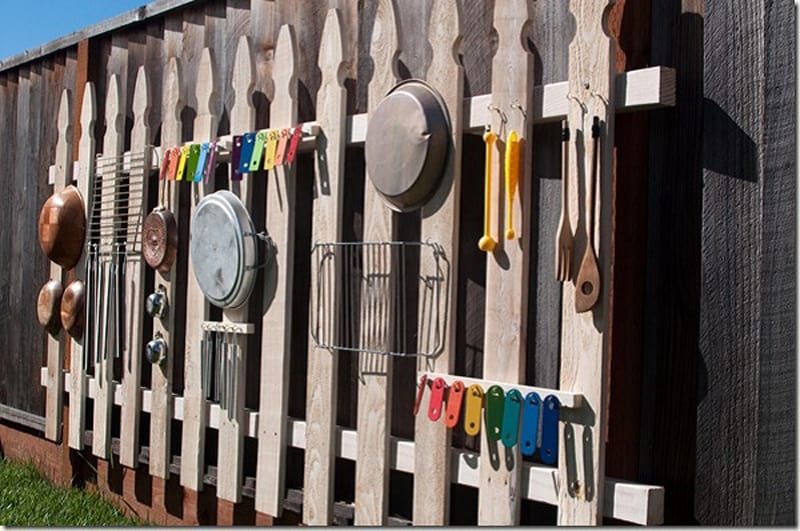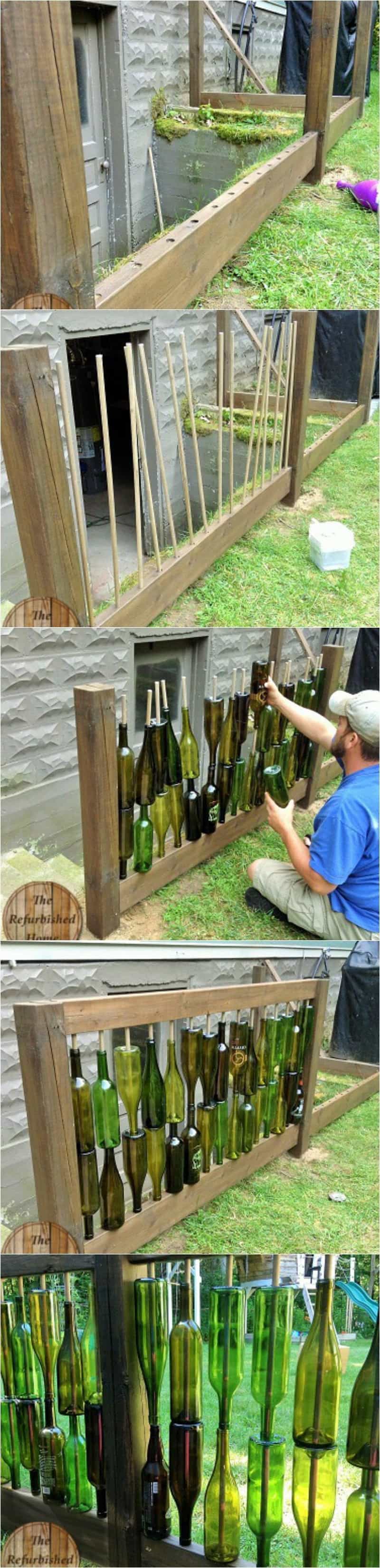


Outdoor music walls and a freestanding baby play yard are one of the easiest, highest-impact outdoor music wall ideas you can add to a child-friendly backyard. Done well, they pull kids outside, get them moving, and let them experiment with rhythm and sound without you buying a single plastic “music toy.” Done badly, they’re a noisy scrap heap kids ignore after two days.
This guide walks through 13 solid outdoor music wall ideas, how to build them, what actually holds up outdoors, and how to avoid the Pinterest fails.

1. The “Five-Good-Sounds” Fence Wall
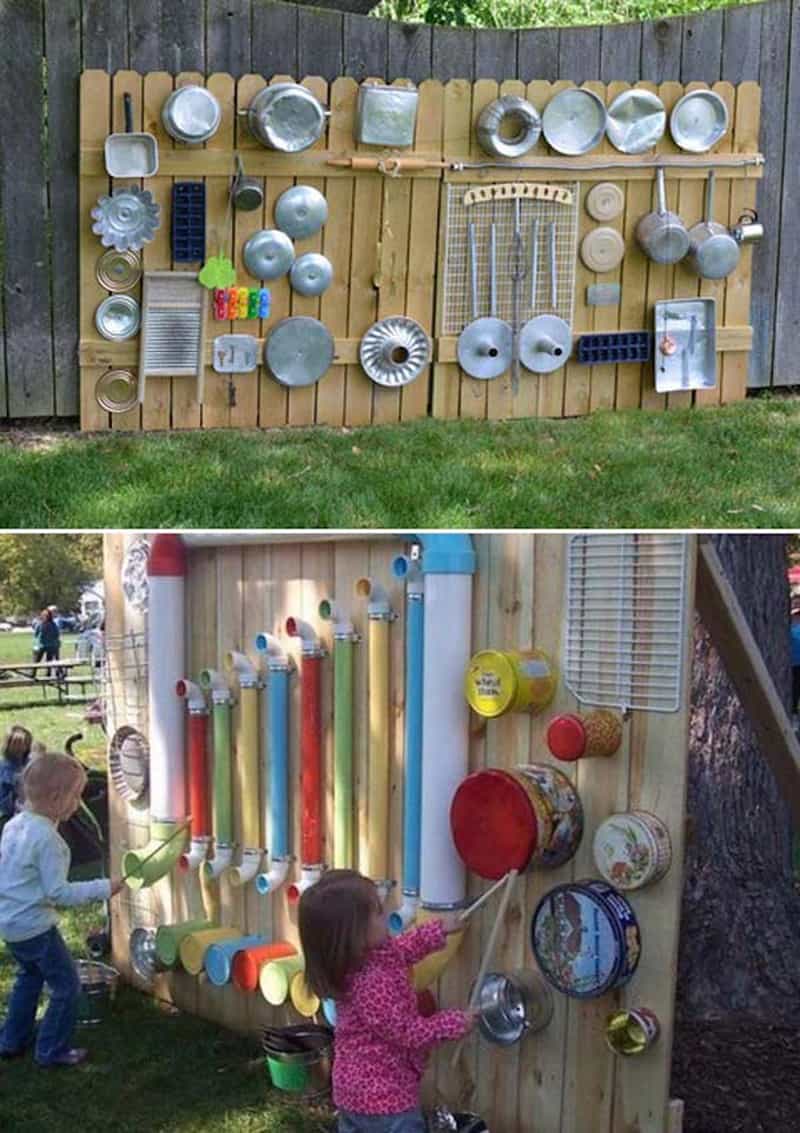
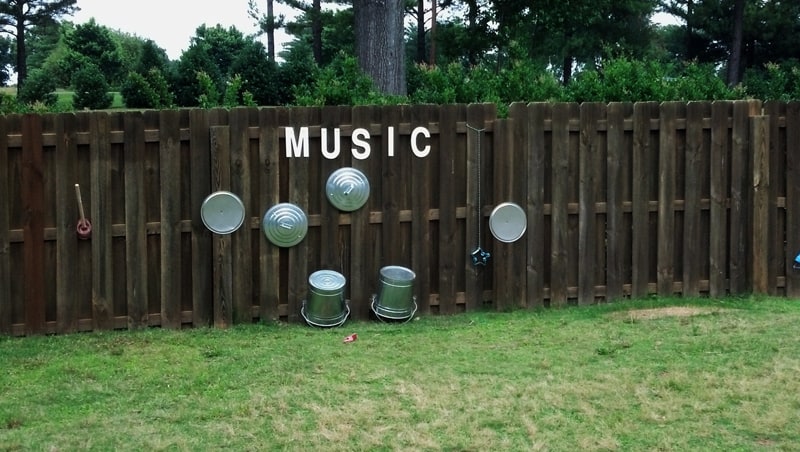
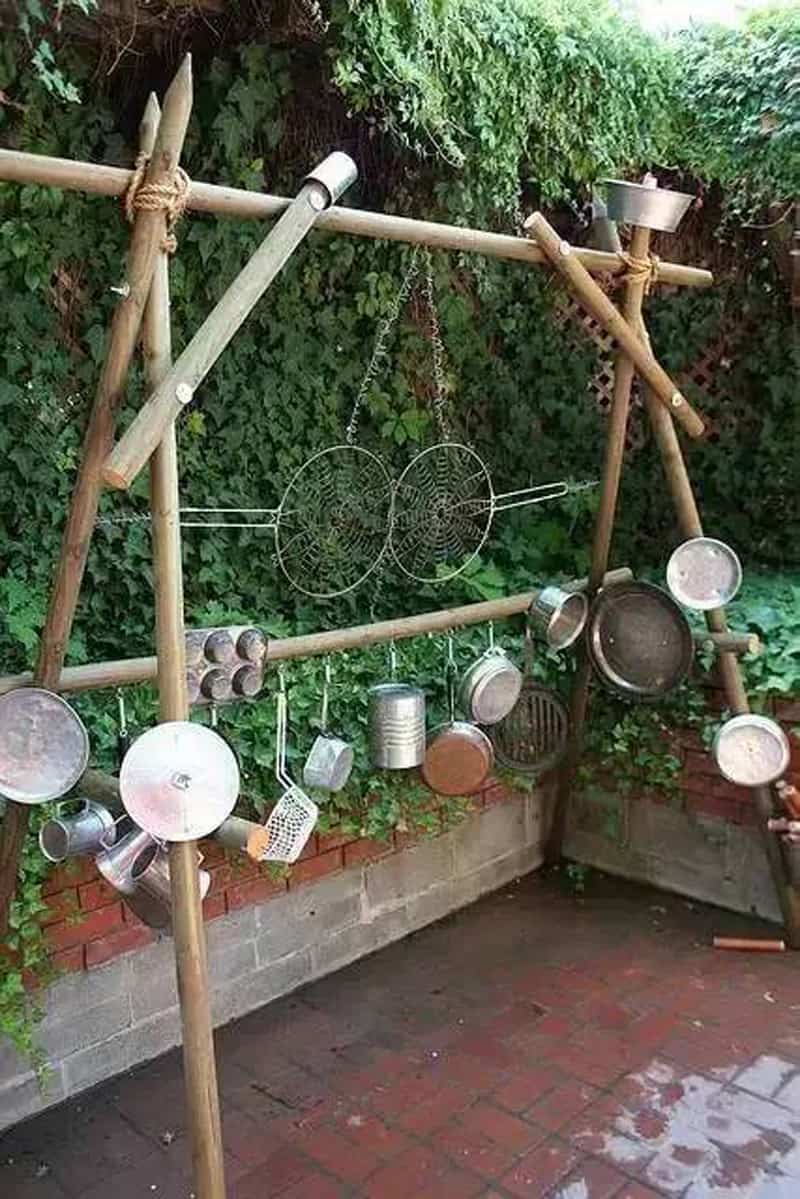
Skip the temptation to hang 30 random objects. Start with five pieces that sound great and feel solid: for example, a deep stainless pan, a lighter baking sheet, a ceramic pot, a metal bowl, and a small set of chimes or a triangle.
Mount them on an existing wooden fence or shed. Space them about a hand-width apart so they don’t crash into each other. This keeps the sound clear instead of turning into a clanging mess.
This is the best entry-level DIY outdoor music wall. It’s cheap, fast, and if the sounds are good, kids will actually use it. Add a small bucket or set of hooks nearby for wooden spoons or kid-safe drumsticks.

2. Pallet Music Wall on Legs
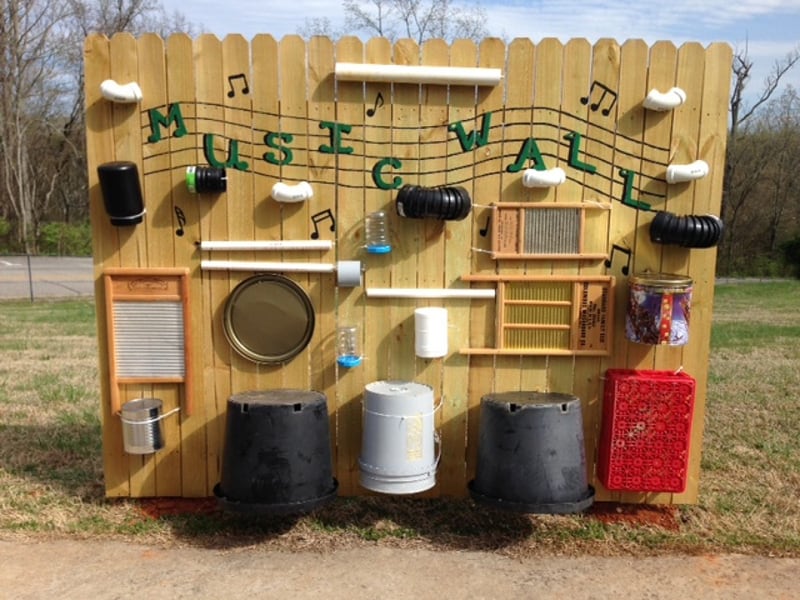
No fence? Use a wooden pallet as a freestanding music wall. Add two sturdy legs or stake it between posts so it can’t tip. The slats make it easy to screw handles and hooks into place.
This works well for renters or anyone who doesn’t want to drill into the house or fence. Keep weight balanced: heavier pans and pots spread across the surface, lighter items like whisks and triangles filling the gaps.
A pallet wall or portable outdoor play yard is ideal in a small yard where you want a dedicated music corner without committing to major construction.
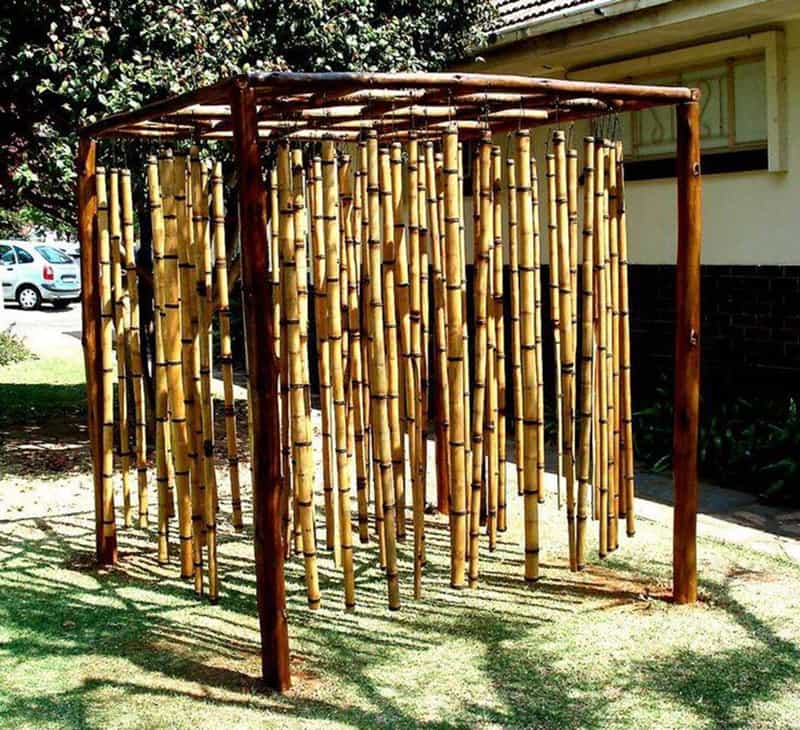
3. Height-Zoned Wall for Mixed Ages
Most music walls fail because everything sits in a straight row at adult eye level. That’s lazy design. Kids under five can’t reach anything, and older kids end up crouching to play the few low items.
Instead, divide your wall into three height zones:
- Low band (30–45 cm / 12–18 in from the ground): big pans, drums, and pipes for toddlers to hit while standing.
- Middle band (45–90 cm / 18–36 in): main instruments for ages 3–7.
- Upper band (90–140 cm / 36–55 in): tuned pipes, chimes, or more complex pieces for older kids.
This one move turns a music wall for playground or backyard into something the whole group can use at once, without fights or frustration.
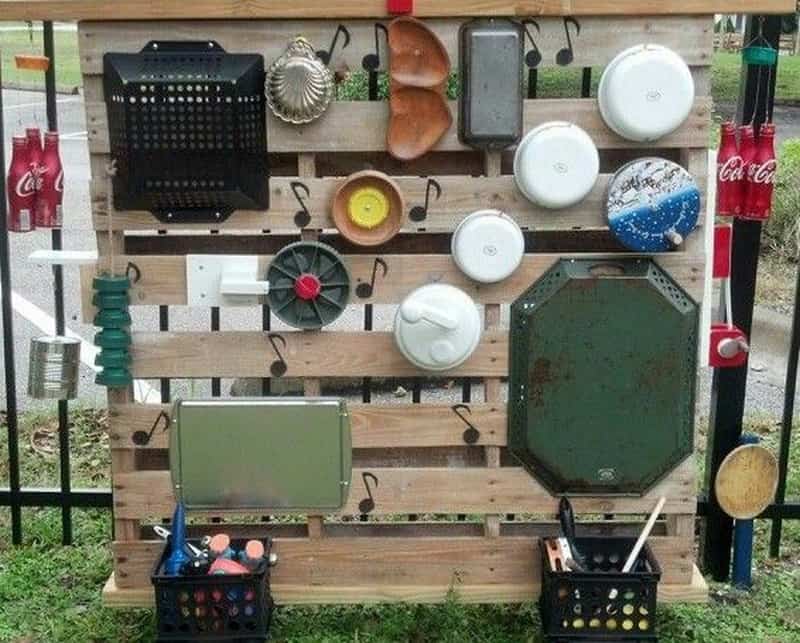
4. Tuned PVC Pipe “Marimba” Wall
If you want kids to stay engaged for years, give them pitch, not just noise. A simple tuned pipe setup does that. Use PVC pipes in different lengths mounted vertically or horizontally so each pipe makes a distinct note when struck.
Secure the pipes firmly to a backing board or railing, and use wooden or rubber-tipped beaters. You can start with 4–6 pipes in a simple scale. Even without perfect tuning, kids will hear patterns and start making “real” music.
Tuned pipes instantly upgrade a DIY outdoor music wall from “random banging” to something closer to an outdoor instrument.
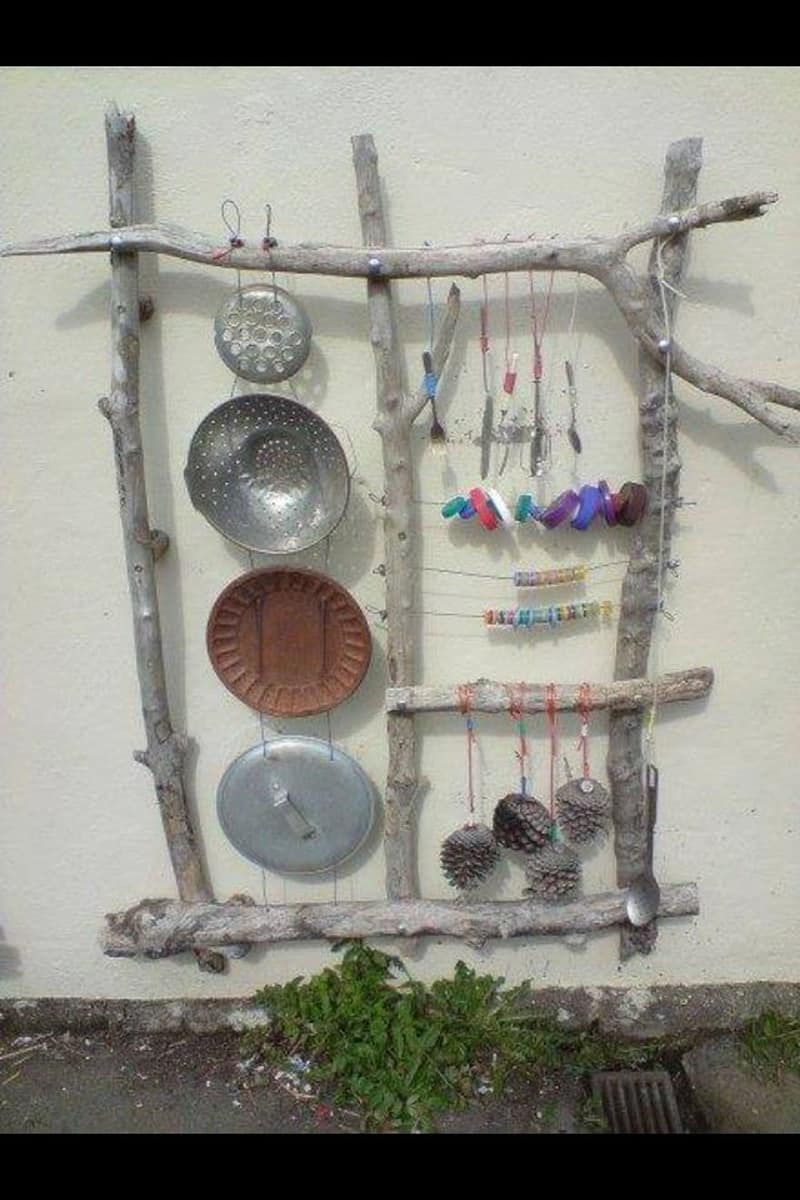
5. Kitchen-Pan Sound Bar
The best-sounding outdoor music walls almost always involve real metal pans. Look for heavy stainless steel, cast iron, or thick aluminum at thrift stores instead of flimsy dollar-store metal. The heavier items boom; the cheap ones give off a sad little clack and rust quickly.
Mount pans by their handles or drill a small hole near the rim and hang from a sturdy screw or hook. Leave a few centimeters between each pan so they can vibrate freely.
This idea works beautifully along one section of fence, with 4–7 pans arranged from largest/deepest to smallest/brightest. Kids instinctively explore the range of sounds.
6. Bottle and Pot Melody Rail
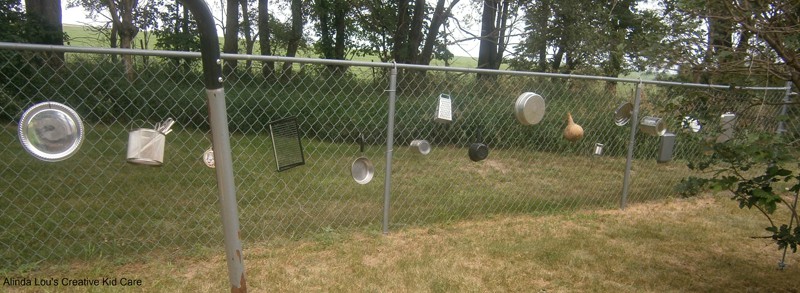
Empty glass wine bottles (with labels and corks removed) and ceramic or terracotta flower pots produce bright, ringing tones. Mounted in a row, they create a simple melody rail.
Hang them from sturdy hooks or screw eyes using weather-resistant cord or metal wire, with enough slack for a small swing but not so much that they smash into each other. Mix sizes for different pitches.
This setup adds a lighter, bell-like tone to your outdoor music wall ideas and pairs well with heavier pans or drums.
7. Pipe Drums and Trash-Can Bass
For kids who love to hit things hard, give them something that can actually take it. Short vertical PVC stubs, plastic buckets, and old metal trash cans make fantastic drums.
Mount bucket rims into a frame or directly to the wall so they don’t walk away. A big metal trash can lying on its side, firmly wedged or bracketed, gives you a deep bass boom when struck.
These low-frequency sounds round out a music wall for playground use, especially in larger yards where noise won’t bother neighbors.
8. Sensory Music Garden Trail
Hanging everything on one flat fence and calling it a “sensory garden” is lazy. A proper sensory music garden for kids weaves sound into planting beds, logs, and paths.
Break your instruments into zones:
Attach a few chimes to a tree branch, tuck a pan trio on a post beside herbs, mount tuned pipes along a low retaining wall, and put a drum station near a log seating area. Kids move, explore, and discover sound as they wander, instead of standing in one spot hammering a fence of junk.
This approach feels more like a natural playground musical instruments trail than a yard full of toys.
9. Climbing Frame Music Add-On
If you already have a climbing wall, play structure, or swing frame, integrate a small music wall into the side that kids aren’t using for climbing, or park a portable baby playpen nearby so toddlers can enjoy the sounds safely.
Use lighter instruments here so you don’t overload the structure: triangles, cowbells, whisks, small pans, and mini chimes. Screw them to a backing board and then fix that board safely to the structure.
It turns “dead” structural sides into active play surfaces without taking more yard.
10. Beater Station Done Right
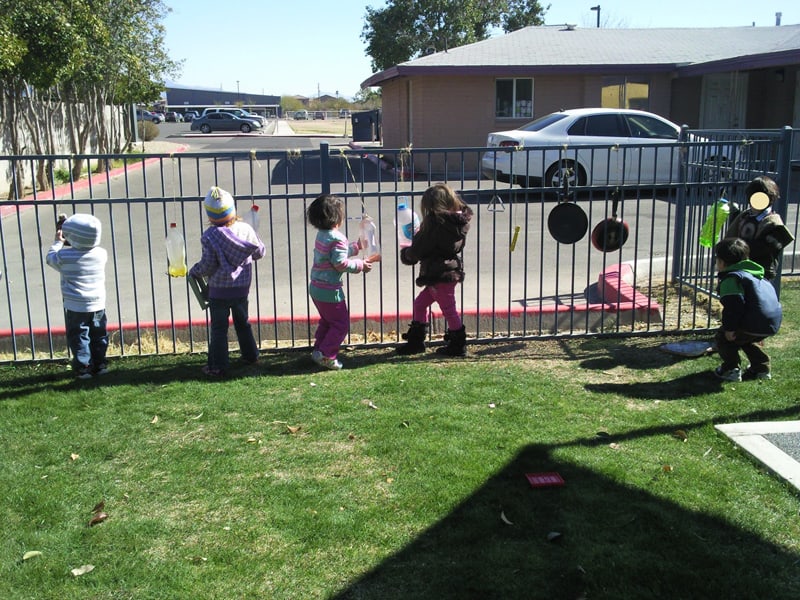
One of the fastest ways to kill a music wall is tying every beater to the wall with string. Kids end up swinging tangled spoons into each other’s faces, and the noise quality is awful when the beater can’t move freely.
Instead, treat beaters like any outdoor toy: some will walk, and that’s fine. Use a simple metal bucket, open crate, or a row of hooks nearby for wooden spoons, kid-sized drumsticks, and rubber mallets.
Plan to replace a few pieces each year. The improvement in play value and sound is absolutely worth it.
11. Minimalist “Three-Instrument” Wall for Small Yards
Working with a tiny patio or balcony-style yard? You don’t need a full orchestra. A small, focused setup works better than trying to cram in everything.
Choose one deep pan, one mid-range metal or ceramic piece, and one set of tuned pipes or chimes. Mount them with some breathing room on a short section of wall.
This still qualifies as a functional DIY outdoor music wall, keeps visual clutter down, and doesn’t turn the whole yard into a sound lab.
12. Upcycled Instrument Corner
If you can get your hands on old xylophones, triangles, cowbells, or chimes, prioritize those over random scrap. Real instruments—tuned or close to tuned—hold kids’ attention much longer.
Mount xylophone bars or frames onto a backing board so they can’t wander off. Fix cowbells and triangles with secure hardware that allows them to swing freely.
Kids start noticing patterns, playing simple tunes, and returning to that corner again and again instead of losing interest after a weekend of random banging.
13. Rotating “Sound Panel” System
For families who like to tinker, build a simple frame that can take removable panels. Each panel is a mini music wall: one with pipes, one with bottles and pots, one with pans, and so on.
Swap them seasonally or when kids get bored. This also lets you bring panels into a shed during harsh winters and extend the life of the materials.
A rotating system keeps your outdoor music wall ideas fresh without adding more permanent clutter to the yard.
Practical Build Tips and Safety Basics
Use real wood, metal, and ceramic where you can. They sound better and survive weather. If you use plastic, go for thick, sturdy pieces and accept they’ll fade and eventually crack outdoors.
Hardware matters: exterior-grade screws, bolts, and hooks stay put. Check all attachments every few months and tighten anything that’s working loose. Make sure there are no sharp edges or exposed threads at kid height.
Backyard builds are usually low-risk, but if you’re attaching to a shared fence, masonry wall, or any structure you didn’t build, check with a local contractor or landlord before loading it up.
Outdoor Music Wall Ideas: FAQs
How many items should I put on a kids’ music wall?
Start with 5–8 strong-sounding pieces. More than that usually turns into visual and audio chaos. You can always add later if there’s clear empty space and kids are still using what’s already there.
What’s the best height for a child-friendly music wall?
For toddlers, aim to have some items starting around 30 cm (12 in) off the ground. Main instruments for preschoolers and early primary ages sit between 45–90 cm (18–36 in). Older kids can comfortably reach up to about 140 cm (55 in). Mix heights so different ages can all play at once.
Will an outdoor music wall be too loud for neighbors?
That depends on yard size and what you use. Deep pans, trash cans, and big pipes are loud; lighter chimes, bottles, and smaller pots are more neighbor-friendly. If you’re close to others, keep the wall away from shared boundaries and emphasize smaller, higher-pitched sounds.
Where to Go from Here
Pick one wall, fence, or pallet. Choose five items that sound genuinely satisfying when you hit them. Mount them at kid-friendly heights, add a beater bucket, and stop there for now.
You don’t need a Pinterest-perfect fence of junk. You need a few good sounds, at the right height, in a yard your kids actually use. Build that, then improve from there.
Also consider integrating other backyard fun ideas like a swing porch, backyard play sets, or outdoor kitchen patio designs to create a full child-friendly backyard retreat.