


If a subscription digital art frame costs $20 a month, you’re not just buying a screen. You’re buying a permanent bill. For some people, that’s the cheapest rotating gallery they’ll ever own. For everyone else, it’s a slow-drip money pit dressed up as “smart décor.” The trick is knowing which camp you’re in before you drill holes in your living room wall.

What a subscription digital art frame actually is (and isn’t)
A subscription digital art frame is basically a wall-mounted smart display tied to an art library or cloud service. You pay once for the hardware, then monthly or annually for the artwork and features that make it feel like a gallery rather than a glorified tablet.

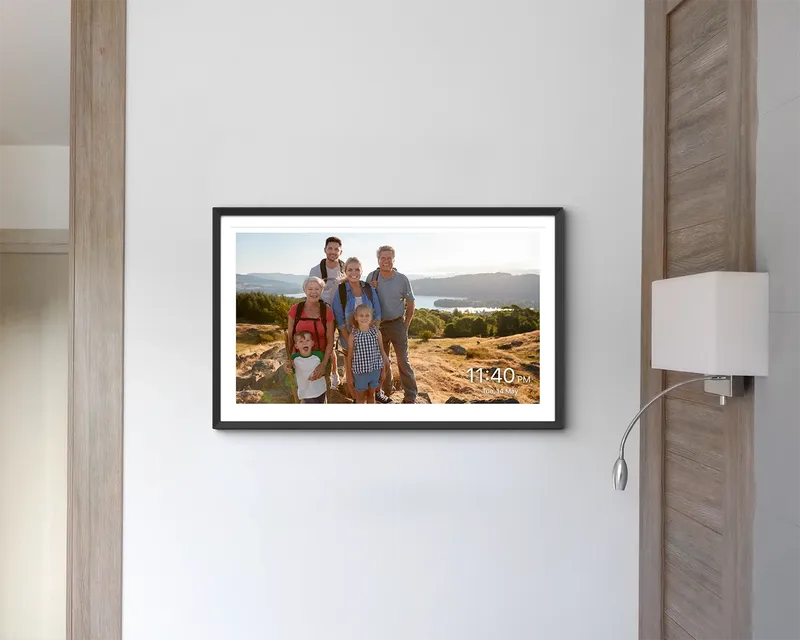
Typical costs today:
- Hardware for home use: roughly $300–$800 for decent mid-range frames; premium or specialist setups go well above that, and commercial models can exceed $3,000.
- Subscriptions: usually $5–$15 per month for curated art libraries; AI-art tools sit around $4 a month; “membership” packages for some brands run around $70 a year.
Here’s the important part: a good subscription frame still works without the subscription. You should be able to load your own photos, your own digital art, and ideally some free artwork without the device turning into dead weight when you stop paying.
Why $20/month changes everything
$20 a month doesn’t sound terrifying. That’s how people end up paying more for content than hardware without realizing it.
Do the three-year math on a “cheap” frame:
Say you buy a $400 frame with a $20/month library. Over three years:
$400 + (36 × $20) = $1,120 before tax and installation.
Compare that to a $750 no-subscription frame that lets you upload unlimited art and photos. Over the same three years, that’s still $750 total. No drip-feed, no hostage situation where your wall art disappears the second you cancel your card.
I trust the $750 no-subscription frame every time. With the $400 + $20/month combo, you pay more over time and you’re locked to whatever catalogue that company thinks you’ll like. If their servers go down, pricing jumps, or the app degrades, your “gallery” starts to crumble.
Best subscription digital art frame for living room walls
For living-room walls, here’s the non-negotiable rule: the subscription must be optional, not life support. If the frame turns into a useless slab the minute you stop paying, that’s not décor, that’s a hostage situation.


Look for these hardware traits before you even think about content plans:
1. Size that reads as art, not gadget
A 13–15.6-inch display can work over a console or in a tight corner, but across a living room it looks like a digital photo frame pretending to be important. For a main wall, 24–32 inches is where it starts to feel like real art instead of a tech toy.
2. Viewing comfort, not TV glare
Good brightness, decent black levels, and anti-glare matter more than brands like to admit. If reflections dominate or it glows like a television, no art will look good. Ambient light sensors and automatic brightness are worth paying for, especially in bright rooms.
3. Mounting and cable honesty
If the frame sticks out too far from the wall or the power cable dangles down like a tail, it kills the effect fast. You want solid wall mounting and a clear plan for hiding the cable—trunking, in-wall wiring, or at least a clever route to a nearby outlet.
4. Offline and no-subscription behavior
This is where many “best subscription digital art frame for living room walls” reviews gloss over the ugly bits. Before you buy, you need answers to:
– What happens to downloaded art when the subscription ends?
– Does it keep showing your personal uploads without an active membership?
– Will it display anything if Wi‑Fi drops?
Strong consumer frames like Meural and Canvia-style products pitch large catalogues plus the ability to upload your own photos and, in some cases, NFTs. Their weak point is psychological: you get a generous first year, then suddenly you’re asked to decide whether the recurring cost is still “worth it” once the novelty fades.
Subscription digital art frame vs traditional digital photo frame
Most “subscription digital art frame vs traditional digital photo frame” comparisons obsess about resolution and features. Wrong target. You’re not buying pixels, you’re buying curation.


| Factor | Subscription digital art frame | Traditional digital photo frame |
|---|---|---|
| Core purpose | Rotating fine art, photography, sometimes NFTs | Personal photos and family sharing |
| Content source | Paid art library + personal uploads | Local storage, app uploads, basic cloud albums |
| Ongoing cost | Usually $5–$15/month for full libraries | Core use is typically free; some cloud extras cost |
| Look and feel | Larger, wall-mounted, designed as décor | Smaller, more like a photo gadget |
| Best at | Discovery – always-changing “art on the wall” | Easy, low-cost family photo display |
| Main weak spot | Subscriptions, app and server dependence | Rarely convincing as gallery-style wall art |
| NFT/digital art features | More likely to have wallet or crypto hooks | Usually an afterthought or not supported |
| Long-term value | Good only if the catalogue keeps earning its fee | Excellent if you just want to show your own photos |
If you’re only going to load family photos, paying for a curated art library is lighting cash on fire. Buy a clean-looking Aura- or Frameo-style frame, skip the art memberships, and enjoy the silence in your banking app.
Subscription digital art frame reviews for NFT and crypto art: what actually matters
NFT and crypto art on subscription frames is wildly oversold. Half the marketing is “Web3” buzzwords wrapped around a normal display.
NFT support usually means one of two things:
1. Wallet-connected frame
The frame talks to your crypto wallet or marketplace, pulls in the artworks you own, and displays them. Better devices let you make playlists, show ownership info, and handle more than one chain.
2. Fixed-content NFT display
Essentially a screen permanently tied to one NFT or artwork. Great if you want a single hero piece as an object. Terrible if your taste, collection, or the market shifts later—you’re locked in.
Before you buy any “NFT-ready” subscription digital art frame, check:
– Which chains and wallets it supports
– Whether it actually verifies ownership or just streams a copy
– What happens to your NFTs on the frame if the subscription ends
– Whether it works if the provider’s cloud service closes or changes terms
– If animation, video, or audio NFTs are supported, not just static JPEGs
If it can’t verify ownership cleanly, can’t show your NFTs without an active subscription, and can’t survive the inevitable Web3 hype crash, it’s just an expensive JPEG viewer with crypto-themed marketing.
Subscription digital art frame cost for offices and commercial spaces
Home use is one thing. Offices and hospitality are a different universe.

For offices, hotels, clinics, and other commercial settings, the real cost isn’t just “frame + app.” You’re paying for:
– Hardware for every screen
– Mounting, electrical work, and cable routing
– Commercial content licensing (very different from home use)
– Central scheduling and remote device management
– Network setup and ongoing IT oversight
– Warranty, replacement units, and support commitments
Premium commercial setups can sit well over $3,000 per screen when you add professional installation and managed services. Yes, multi-unit discounts around 40–50% exist, but often only for hardware, not the software or licences that actually keep the displays legal and usable.
I’ve seen businesses try to cheap out with consumer subscription digital art frames—one membership per device, no clear commercial rights—and end up trapped paying dozens of separate fees with zero legal cover for public display. That’s amateur hour.
If you want digital art across a workplace or hospitality property, spend on a proper commercial platform with:
– Explicit commercial display rights in writing
– Central control over content and scheduling
– A single contract for multiple devices
Otherwise, you’re hanging very expensive screens that can be shut off with a single terms-of-service update.
How to decide if a subscription frame is worth it (in five brutal checks)
Use this once before you buy. It will save you from the “fun at first, annoying forever” purchase.

- Run the three-year cost: Add frame price + 36 × monthly fee + realistic installation. If that number makes you flinch, it will not hurt less later.
- Ask: would I pay this if it were a magazine? If you’re not genuinely excited to see new art every week, the subscription will start to feel like rent.
- Check the offline mode: No offline display of your own images? Walk away. That’s basic.
- Look past the free year: Ignore any “first 12 months included” pitch. Judge it on what you’ll pay from year two onward and what you’re realistically going to use.
- Confirm your use case: Photos and family? Get a straightforward digital photo frame. Art discovery and NFTs? Then, and only then, a subscription digital art frame might actually earn its $20/month.
Mini FAQ
Is a $20/month subscription digital art frame ever actually good value?
Yes—but only if you treat it like a permanent art membership, not a gadget. If you actively enjoy rotating through curated collections, explore new artists often, and keep the frame on daily in a high-visibility room, $20/month can be cheaper than buying and framing new art regularly. If you’ll forget about it after a few months, it’s a waste.
What’s the best subscription digital art frame for a living room?
The best option is a 24–32-inch, wall-mounted frame with strong brightness control, tidy cable management, and a subscription that is truly optional. Meural- and Canvia-style products sit in that lane, but you must be comfortable with their libraries and recurring fees. If you’re lukewarm on the catalogue, choose a large no-subscription frame instead and use your own art and photography.
Can I avoid subscriptions completely?
Yes. Look at large-format frames marketed with unlimited local storage and no ongoing content fees. They won’t give you a heavily curated art library out of the box, but if you already have access to digital art (or you’re happy sourcing high-resolution works legally), they give you the best long-term cost control and far fewer unpleasant surprises.
Bottom line: a subscription digital art frame can either be the smartest art spend in your home or the most annoying line on your card statement. If the hardware is great and the frame still earns its keep without the subscription, you’re in safe territory. If the whole thing collapses the minute you stop paying, keep your wall—and your money—free.