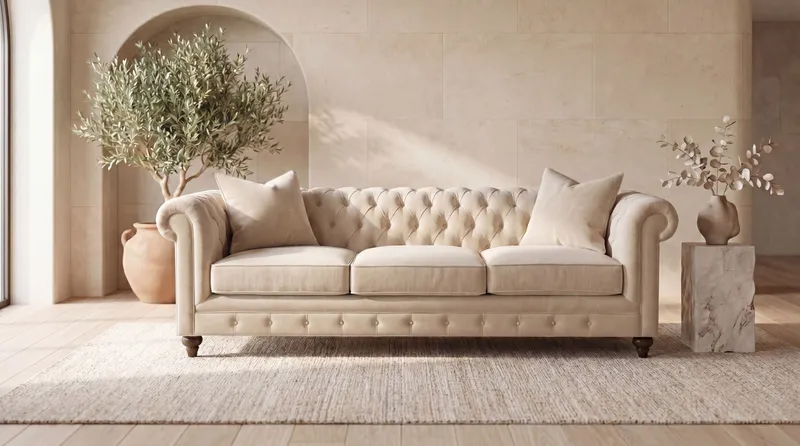
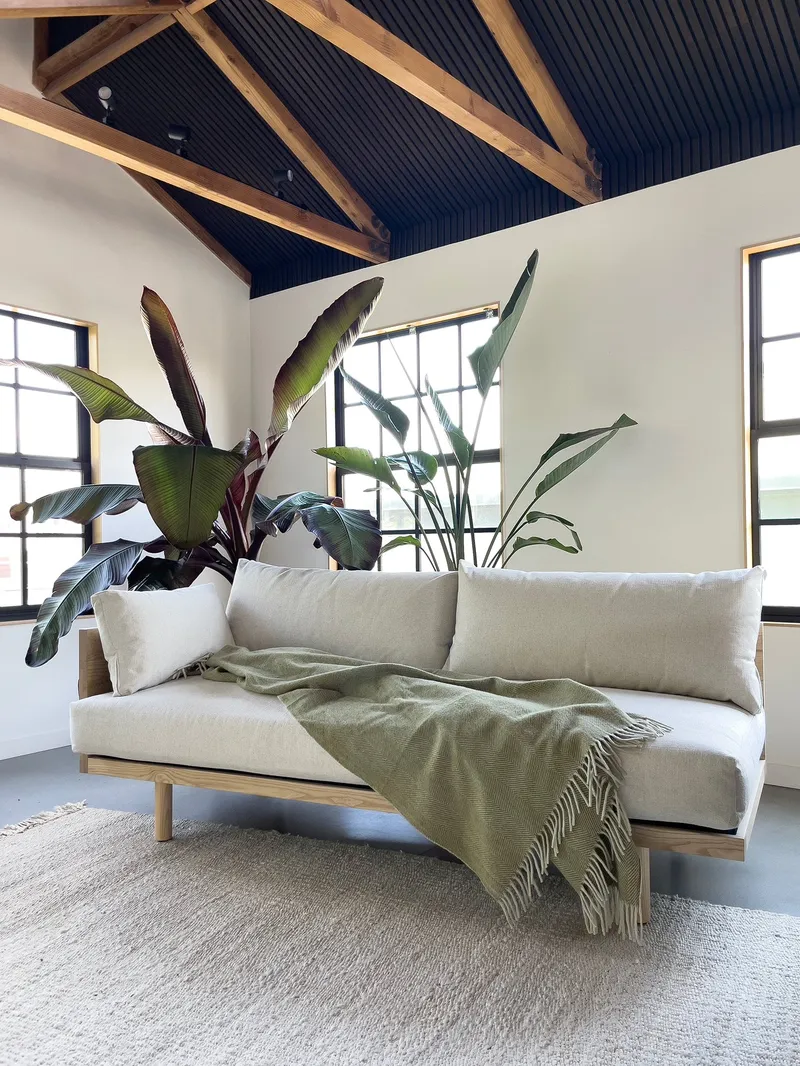
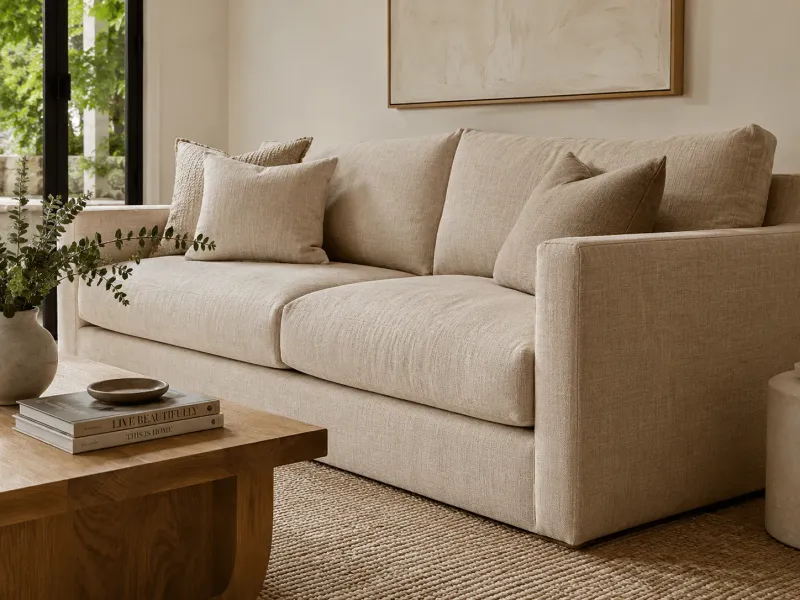
You’re standing in a showroom, hand on a beautiful “natural fiber upholstery fabric sofa,” being told it’s eco-friendly, breathable, and will “age gracefully.” What nobody is saying out loud is that this same sofa might show water rings from a single spilled drink, or look baggy and tired before the finance plan is even paid off. The choice here isn’t just linen vs cotton vs wool vs polyester. It’s: do you want a sofa you live on, or a sofa you nervously protect.
For most modern households that actually use their main sofa—kids, pets, Netflix, snacks—a well‑made performance polyester with a natural look is the most sensible default. A tight wool can work if you’re careful. Pure linen and plain cotton are “sometimes” fabrics, not everyday warriors. If you want one line to guide you: use performance polyester for the main family sofa, and reserve the more delicate natural fibers for secondary or low‑use seating.
| Metric | Linen upholstery (natural fiber) | Cotton upholstery (natural fiber) | Wool upholstery (natural fiber) | Performance polyester upholstery |
|---|---|---|---|---|
| Durability | Heavy-duty linen example: ≥90,000 Martindale cycles (Camira Craggan Flax) [1] | Not established | Recycled wool example: ≥80,000 Martindale cycles (Camira Resku 20) [2] | Estimated service life 12–18 years in residential use [3] |
| Moisture / water resistance | Flax linen fibre moisture regain 10–12%; hygroscopic and absorbs spills readily [4] | Cotton fibre moisture regain 7–8.5%; absorbs liquids, increasing stain risk [5] | Wool moisture regain 14–18%; fibre takes up moisture but surface repels liquid water [6] | Not established |
| VOC emission level (g/L) | Not established | Not established | Not established | Not established |
| R-value / thermal resistance | Not established | Not established | Not established | Not established |
| Maintenance interval (years) | Not established | Not established | Not established | Service life 12–18 years is typical replacement interval, with ongoing routine cleaning [3] |
| Cost per unit (both m² and sq ft) | $30–$60 per yard (natural-fibre mainstream linen upholstery) [7] Per m² / sq ft: Not established | $10–$45 per yard (cotton upholstery fabric) [8] Per m² / sq ft: Not established | Not established | Not established |
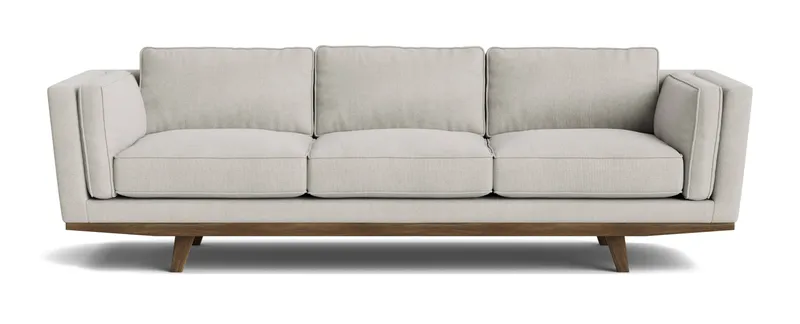
Linen upholstery fabric sofas
Linen is the thing everyone falls in love with under showroom lighting: that dry, cool hand, slubby texture, “European” look. For a natural fiber upholstery fabric sofa, it’s the poster child. Technically, the fibre can be strong, and heavy-duty linen upholstery can hit serious abrasion numbers—Camira’s Craggan Flax runs at ≥90,000 Martindale cycles [1]. On paper, that sounds bombproof.
In real living rooms, the failure is almost never the Martindale number. It’s everything else: wrinkling, tide marks from water, a rumpled look that some people call “relaxed” and others call “why does my new sofa look tired already?” Those reported drawbacks—wrinkling, staining, abrasion appearance, fading, and that casual look many perceive as messy—are standard linen complaints on sofas [9]. If you expect crisp, tailored perfection long term, linen will beat you.
Linen’s fibre physics don’t help you with spills either. Flax has a moisture regain of 10–12%, which means it’s hygroscopic and keen to take on moisture from the air and any liquid that hits it [4]. On a sofa, that translates into fast absorption, darker patches, and a high risk of visible water rings after “quick” DIY cleaning. Once a stain has migrated into the fibres, it’s harder to fully reverse, especially on pale cloth.
Installation is more demanding than a dense synthetic. Pure, loosely woven linen can shift at seams, telegraph frame imperfections, or bag out on big cushions. A good upholsterer will push you toward a heavy-weight, properly backed upholstery linen rather than a dressmaker-style fabric, and they’re right to do so—Camira’s 90,000 Martindale example is backed and engineered for seating, not curtains [1]. But even the tough stuff will still crease and telegraph wear patterns; that’s the visual reality of linen, not a quality defect.
Maintenance with linen is where many owners lose patience. You vacuum gently, you blot instead of scrub, you treat moisture like a threat. Aggressive wet cleaning and over-wetting during spot cleaning is how you get shrinkage, puckering, and those infamous dark tide lines that never quite even out again. A removable linen slipcover helps you psychologically, but washing it can tighten seams or distort the fit, so “just throw it in the machine” is wishful thinking more than a plan.
My blunt view: a pure linen upholstery sofa as the main family couch is self-sabotage. If you love linen, buy a heavy-weight linen blend with backing for a formal room, or use linen as a slipcover you’re prepared to replace. Don’t expect it to stay looking sharp under real-world family use.
Cotton upholstery on sofas
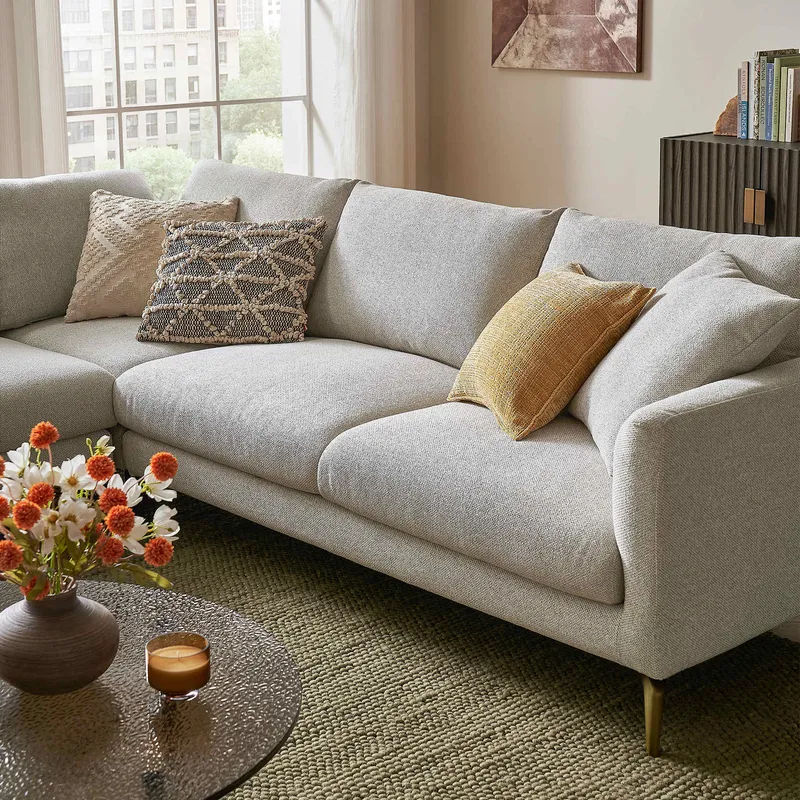
Cotton sells itself as the honest, soft, “eco” choice—especially when you’re looking at a natural fiber upholstery fabric sofa and trying to avoid synthetics. You see words like breathable and washable and your brain hears low‑maintenance. That’s optimistic.
Like linen, cotton pulls moisture into the fibre. Its moisture regain sits around 7–8.5% [5]. That’s a bit lower than flax, but still more than enough to grab spills and body oils instead of letting you wipe them away. On a pale, plain cotton, that shows up as darkened arms, haloed seat stains, and greasy head patches that refuse to blend back in. The fabric can still be structurally fine while looking cosmetically exhausted.
Cost is the one thing working clearly in cotton’s favour. Upholstery-weight cotton suitable for sofas in the US typically lands somewhere between $10 and $45 per yard [8], noticeably cheaper than the $30–$60 per yard you’ll see on mainstream upholstery linen [7]. That’s material only—labour and frame are on top—but it’s a very real budget difference if you’re reupholstering a large sectional.
Unfortunately, lower cost doesn’t mean lower stress. Cotton covers like to shrink when over‑wetted, and repeated washing can pull them out of alignment with the cushions. This is where you get the classic “baggy slipcover” look, or the cushion cover that technically still fits, but only if you fight the zipper. On fixed upholstery, over-wet professional or DIY cleaning can cause puckering at seams and visible rings as some areas dry faster than others.
Day to day, plain cotton needs more babysitting than most people imagine: regular vacuuming, rotating cushions wherever possible, and lightning-fast blotting of spills. And if you have kids or pets, that story of “I’ll just get them professionally cleaned every year” usually collides with the reality that each wet clean carries a shrinkage and distortion risk.
I’m harsh on cotton for main sofas for one reason: I’ve watched too many plain, pale cotton couches look battered in under a year. Cotton vs polyester sofa fabric for a real household? Polyester wins unless you enjoy worrying about every cup of coffee and every guest’s jeans.
Wool upholstery fabric sofas
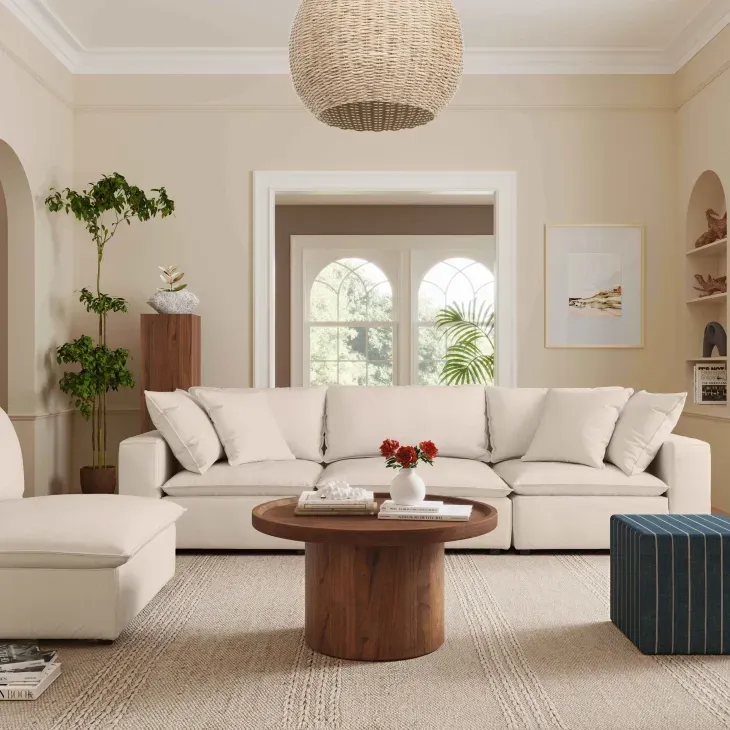
Wool is the quiet grown‑up of the natural fibre world. If a client wants a genuinely natural fiber upholstery fabric sofa but also wants some resilience, this is where I start looking. Proper upholstery-weight wool can be impressively tough—Camira’s Resku 20 recycled wool upholstery fabric is rated at ≥80,000 Martindale cycles [2]—and those are numbers that belong in hard‑working living rooms, not just formal parlours.
The clever part with wool is how it handles moisture. The fibre itself holds a lot—14–18% equilibrium moisture regain under standard conditions [6]—but the external surface tends to repel liquid water [6]. On a sofa, that often means you get a bit more time to blot a spill before it bites deeply, and minor marks are better disguised by the tweedy, heathered, or textured weaves wool is often woven into.
Visually, wool can sit anywhere from crisp and tailored to soft and nubby. For durability with pets and kids, I’d stick to tight, smooth, dense weaves; bouclé and loopy textures are a snagging playground for claws. Snags and pulled yarns, once they happen, are far more irritating than a faint seat shadow you only notice in certain light.
Maintenance is relatively sane: vacuum, blot, respect the care code, and book professional cleaning when you actually need it rather than as a reflex. Wool can show pressure marks and occasionally hang onto odours, but it generally bounces back better than linen or cotton from everyday use. Get the colour and weave right and a wool sofa can age with a kind of graceful softening instead of obvious damage.
Where I draw the line is wool in chaotic family rooms with red wine, dark denim, messy pets, and no house rules. It’ll beat linen and cotton, but it still isn’t invincible. As a natural option for adults’ living rooms, studies, or homes with reasonably respectful teenagers, though, wool is a genuinely strong compromise between eco story and lifespan.

Performance polyester upholstery sofas
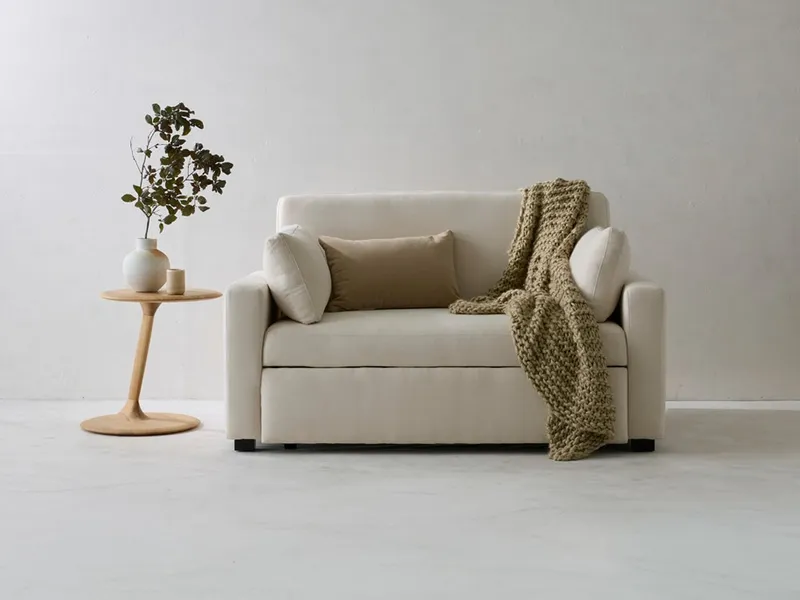
This is the workhorse. When I hear “this is our main family sofa” and “we have kids / pets / movie nights,” my brain goes straight to a tight-weave polyester or a proper branded performance fabric that just happens to look like linen or wool.
The data backs up the lived experience: performance polyester upholstery used indoors in climate-controlled residential settings is typically expected to last 12–18 years [3]. That’s the whole-of-life estimate under normal use, not just an abrasion test on a fabric swatch. In practice, that often means your frame or your taste will give out before the fabric does, which is exactly what you want from an “eco” standpoint—fewer replacements.
We don’t have a single Martindale number in the facts for polyester, but high-grade performance lines are built to sit in the same conversation as the 80,000–90,000 cycle wool and linen examples [1][2]. The difference is how they behave under stains, wet cleaning, and UV rather than just rubs. A good performance polyester is engineered to shed or release many of the everyday spills that natural fibres cheerfully absorb.
On moisture, the picture is again practical rather than romantic. Polyester doesn’t have published moisture regain here, but in real rooms it tends to resist liquid longer and dry faster, which is why those 12–18‑year service‑life numbers are plausible [3]. Less absorbed liquid equals fewer deep stains and less fibre breakdown over time.
Maintenance is, genuinely, easier. You still need to vacuum (dust and grit abrade anything over time), but spills are more forgiving, and cleaning methods are broader without the same shrinkage terror you get with cotton. Yes, cheap poly can pill or go shiny. I’m not telling you to buy the cheapest bolt you find; I’m telling you that a good, tightly woven performance polyester will quietly put in a decade or more of service while linen and cotton are on their second reupholstery.
If you’re wrestling with the “eco friendly sofa materials” question, this is the hard truth: a single well-made frame covered in durable performance polyester that lasts 12–18 years [3] beats three “pure natural” sofas that each need recovering early because they stain and wear badly. Longevity is greener than purity. Hangtags don’t sit; families do.

Which one should you choose?
Let’s drop the theory and talk about real scenarios.
Main family sofa, heavy daily use
Winner: Performance polyester.
If this is the sofa everyone lives on—kids, guests, snacks, naps—you want that 12–18‑year expected service life [3], you want forgiving stain behaviour, and you don’t want to babysit wrinkles and water marks. A natural‑look performance fabric (linen-look or wool-look weave) gives you the aesthetic of a natural fiber upholstery fabric sofa with the durability of a synthetic. Linen and cotton in this setting are how you end up angry at your own principles.
Eco-conscious household, but realistic about use
Winner: Wool or recycled/performance polyester, depending on habits.
If your “eco-friendly” goal includes not throwing away a sofa every few years, a dense wool upholstery with ≥80,000 Martindale cycles [2] or a quality performance polyester with a 12–18‑year service life [3] is more responsible than a delicate pure linen that wrinkles, stains easily [9], and pushes you toward early reupholstery. If your lifestyle is fairly careful, wool is a strong natural option. If it’s rowdy, go performance and sleep at night.
Formal living room or secondary sofa
Winner: Backed, heavy linen or wool.
Here you can finally let linen be linen. A heavy-duty upholstery linen with ≥90,000 Martindale cycles [1] or a quality wool with ≥80,000 Martindale [2] will handle occasional use very well. Infrequent sitting means the wrinkling and relaxed appearance of linen [9] read as charm instead of chaos, and you’re not cleaning it constantly. Cotton is possible, but at $10–$45 per yard [8] it’s best treated as a casual slipcover you’re prepared to replace rather than a once‑in‑a‑lifetime investment.
Pets on the sofa
Winner: Tight-woven wool or performance polyester; natural fibres only with eyes open.
For pets, you want tight, flat, non-looped textures. Wool’s ability to repel surface liquid water [6] and hide minor marks can help, but claws and loose weaves are a bad mix. A densely woven performance polyester will generally take claws, hair, and cleaning better over that 12–18‑year window [3]. If you insist on “all natural,” aim for a dark, tight wool and accept snagging and patina as part of the deal.
Budget reupholstery
Winner: Cotton or a value polyester—carefully chosen.
Cotton’s $10–$45 per yard range [8] can save real money against linen’s $30–$60 [7]. But understand that you’re trading upfront savings for more visible wear and a higher risk of shrinkage drama at cleaning time. If the sofa is lightly used or you’re comfortable replacing covers more often, cotton can be fine. If this is your only sofa and you hate visible wear, stretch your budget toward a decent performance fabric instead.
For all these scenarios, local fabric availability, cleaning methods, and fire regulations differ by region, so always confirm care codes, test a sample at home, and check that the fabric meets your local safety requirements before committing.
Key facts
Show all 9 rows ▾Hide table ▴
| What it covers | Value | Source |
|---|---|---|
| Heavy-duty linen upholstery abrasion resistance | Camira Craggan Flax: ≥90,000 Martindale cycles (D4966) [1] | Camira (manufacturer) [1] |
| Recycled wool upholstery abrasion resistance | Camira Resku 20: ≥80,000 Martindale cycles (D4966) [2] | Camira (manufacturer) [2] |
| Linen (flax) fibre moisture behaviour | Moisture regain 10–12%; hygroscopic, absorbs upholstery spills [4] | IntechOpen (standard) [4] |
| Cotton fibre moisture behaviour | Moisture regain 7–8.5%; increases susceptibility to liquid stains [5] | IntechOpen (standard) [5] |
| Wool fibre moisture and liquid water behaviour | Equilibrium moisture regain 14–18%; fibre absorbs moisture while surface repels liquid water [6] | Fibers of Earth (trade) [6] |
| Performance polyester upholstery service life | Estimated 12–18 years indoors in climate-controlled residential settings [3] | Cardinal Patio Furniture (trade) [3] |
| Linen upholstery fabric cost range (US) | $30–$60 per yard for mainstream upholstery-weight linen [7] | LS Fabrics (blog) [7] |
| Cotton upholstery fabric cost range (US) | $10–$45 per yard for cotton suitable for sofas [8] | Povison (manufacturer) [8] |
| Common linen upholstery drawbacks | Wrinkling, staining, abrasion limits, fading, relaxed/“messy” appearance [9] | VI Reupholstery (trade) [9] |
Quick answers
Is a linen upholstery fabric sofa durable enough for everyday family use?
A heavy-duty upholstery linen can hit ≥90,000 Martindale cycles [1], which is structurally durable, but real-world complaints focus on wrinkling, staining, fading, and a relaxed look many see as messy [9]. For a main family sofa that needs to look neat under constant use, linen’s cosmetic weaknesses often matter more than its abrasion rating.
How long should performance polyester upholstery last on a sofa?
Performance polyester upholstery used indoors in a climate-controlled home typically has an estimated service life of 12–18 years [3]. In practice, that means a well-made polyester-covered sofa can stay functional long enough that you’re more likely to replace it for style reasons than because the fabric failed.
Is cotton or linen more prone to staining on a sofa?
Both fibres absorb moisture, but flax linen has a moisture regain of 10–12% [4] while cotton sits at 7–8.5% [5], so linen is even more eager to take up spills and show water marks. Cotton will still stain readily, but linen’s higher hygroscopicity and known issues with staining and tide lines [4][9] make it the more temperamental of the two.
What natural fiber upholstery fabric sofa is best if I want something tougher?
For toughness in a natural fibre, wool upholstery with an abrasion rating like ≥80,000 Martindale cycles [2] is a better bet than plain linen or cotton. Wool’s surface tends to repel liquid water while the fibre absorbs moisture [6], giving you more forgiveness with spills and generally better long-term appearance on a hard-used sofa.
Is polyester really more eco-friendly than natural fibers for sofas?
From a longevity standpoint, a performance polyester sofa that lasts 12–18 years [3] can be more eco-friendly than a natural fibre sofa that stains, wrinkles, and needs recovering early [9]. The greener option is often the one you don’t have to replace or reupholster repeatedly, but you should still check local recycling options and manufacturer information for a full picture.
How much more expensive is linen upholstery than cotton for a sofa?
In the US, mainstream upholstery linen usually costs $30–$60 per yard [7], while cotton upholstery fabric suitable for sofas runs about $10–$45 per yard [8]. That means linen can easily cost you more per yard before you even factor in labour, making cotton the cheaper—but not always longer lasting—natural option.
Sources
Facts last verified 2026-10-15.
- Camira Craggan Flax heavy-duty upholstery fabric has an abrasion resistance of at least 90,000 Martindale cycles. — Camira, retrieved 2026-10-15.
Abrasion Resistance* D4966 Martindale method, Heavy Duty Upholstery Independently certified to ≥90,000 cycles
- Camira Resku 20 recycled wool upholstery fabric has an abrasion resistance of at least 80,000 Martindale cycles. — Camira, retrieved 2026-10-15.
Abrasion Resistance D4966 Martindale method. Heavy Duty Upholstery independently certified to ≥80,000 cycles.
- Performance polyester upholstery used indoors in climate-controlled residential settings has an estimated service life of 12–18 years. — Cardinal Patio Furniture, retrieved 2026-10-15.
Performance polyester – Residential + Indoor (climate controlled) = 12-18
- Flax fiber typically has a moisture regain of 10% to 12%, indicating that it is hygroscopic and can absorb moisture from spills in upholstery applications. — IntechOpen, retrieved 2026-10-15.
the flax fiber color is yellowish to gray, length 18 to 30 inches, elongation at a break of 2.7 to 3.5%, and moisture regain 10 to 12% [12].
- Cotton fiber typically has a moisture regain of 7% to 8.5%, which allows it to absorb moisture and increases its susceptibility to liquid stains when used as upholstery fabric. — IntechOpen, retrieved 2026-10-15.
Cotton contains 7–8.5% of moisture regain.
- Wool fiber typically has an equilibrium moisture regain of 14% to 18% under standard atmospheric conditions, while its external surface repels liquid water. — Fibers of Earth, retrieved 2026-10-15.
Typical figures under such conditions are roughly 14 to 18% for wool, about 11% for silk and lyocell, a few percent for nylon, and well under 1% for polyester, where laboratory measurements on fabrics…
- Mainstream upholstery fabric, including linen suitable for upholstery, typically costs $30–$60 per yard in the US market. — LS Fabrics, retrieved 2026-10-15.
Mainstream upholstery fabric typically costs **$30 to $60 per yard**, while designer or performance grades can run **$100 to $200 or more per yard**.
- Cotton upholstery fabric suitable for sofas typically costs $10–$45 per yard in the US market. — Povison, retrieved 2026-10-15.
Cotton, Polyester: $10–$45/yard
- Reported drawbacks of linen upholstery include wrinkling, staining, abrasion limits, fading, and a relaxed appearance that some customers perceive as messy. — VI Reupholstery, retrieved 2026-10-15.
|Linen|Crisp hand, natural slub, elegant casual appearance, breathable feel|Wrinkling, staining, abrasion limits, fading, and a relaxed look that some customers read as messy.|