


Jellyfish chandeliers sit in that dangerous zone between art and theme décor. Handled well, they’re mesmerizing: a floating sculpture that throws layered light and shadow. Handled badly, they look like props from an underwater-themed buffet.
If you’re going to commit to a jellyfish chandelier, do it properly. This guide breaks down what actually works, where these fixtures belong, and how to avoid the Instagram-coastal and “kids’ museum” traps.
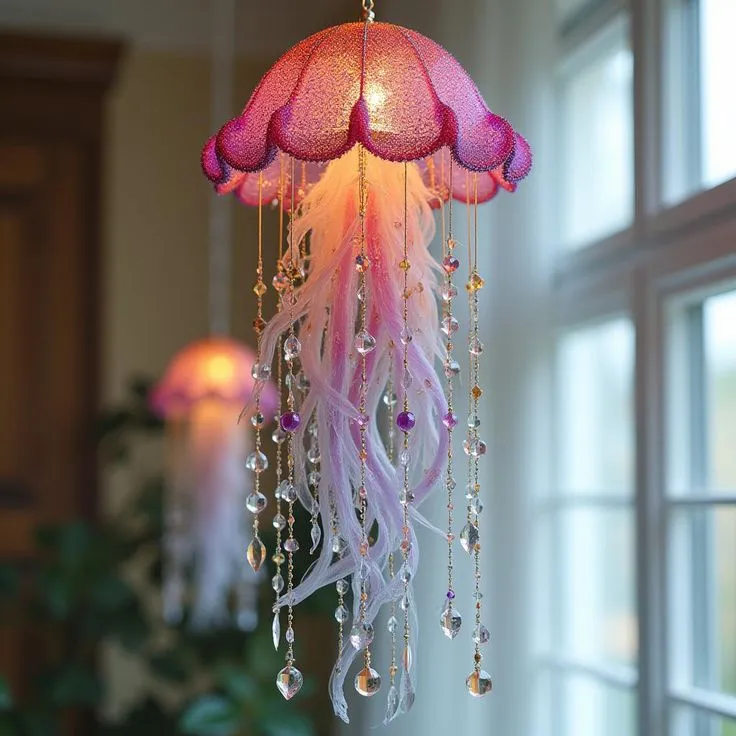
What is a jellyfish chandelier, really?
A jellyfish chandelier is a statement light with a rounded “bell” form and trailing elements that mimic tentacles. That can mean blown glass, acrylic, wood beads, or metal strands, but the silhouette is always distinctly marine.
Designers use them as focal points in dining rooms, entry halls, bedrooms, and hospitality projects. The best versions read as sculpture first, jellyfish second. The worst scream “themed restaurant” before you’ve even turned them on.
The primary variants you’ll see:
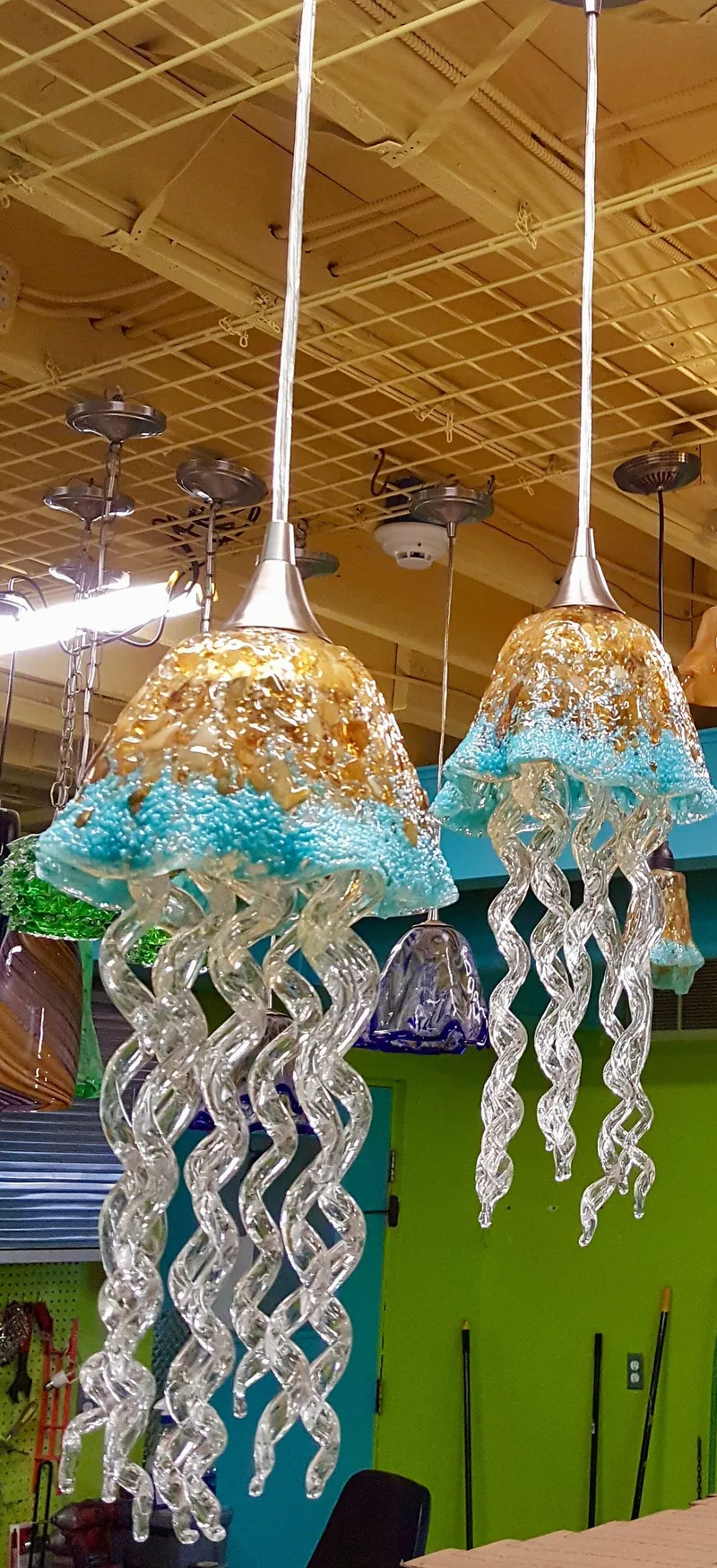
1. Beaded “coastal” jellyfish chandeliers
These use layers of wood or seed beads as tentacles. They show up in listings as “jellyfish chandelier lighting for coastal interiors” and dominate beach-house hashtags.
They promise relaxed, organic texture and soft, diffused light. In reality? Most of them look cheap in person. I’ve seen these a year in: dusty strands, tangles, and a general “craft-project in a rental Airbnb” vibe. If you care about long-term quality, skip them.
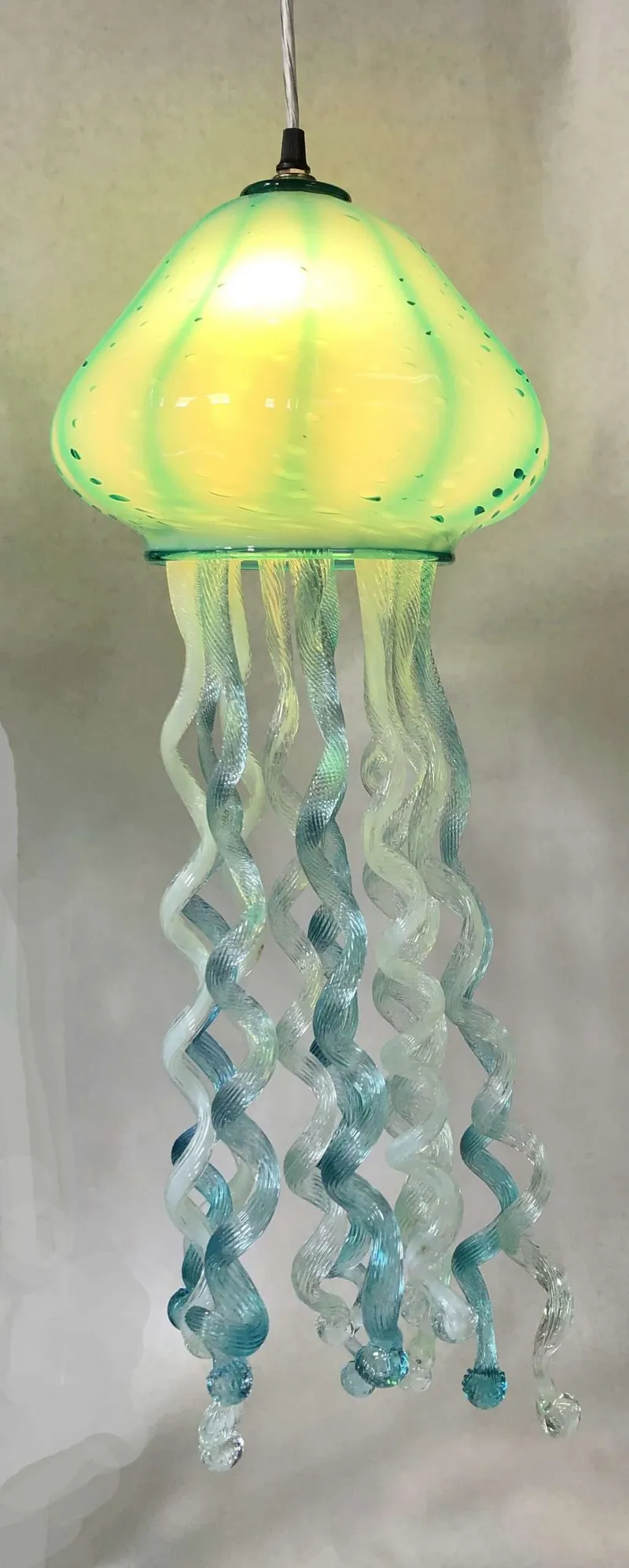
2. Modern jellyfish pendants for dining rooms
These are the cleaner, contemporary interpretation: flattened “bell” shades in a row over a linear bar, often in gold or chrome. Think a modern multi-light pendant that hints at a jellyfish without going full costume.
Many use integrated LED modules (around 40 W total) with selectable color temperatures—3000 K (warm), 4000 K (neutral), and 6000 K (cool). They suit dining tables, kitchen islands, and benches where you want drama but still need even light.
3. Acrylic and metal underwater-inspired statement chandeliers
Here you get literal jellyfish silhouettes: domed acrylic caps, hanging plastic “tentacles,” color-changing LEDs. Some are sized for small rooms (around 10–15 m²) and offer selectable warm, neutral, or cool settings.
They’re fun for a week. Then you realize you’re eating dinner under a children’s museum exhibit. The plastic, the shifting colors, the visible LED hardware—all of it reads toy, not design.
4. Hand-blown glass jellyfish chandeliers
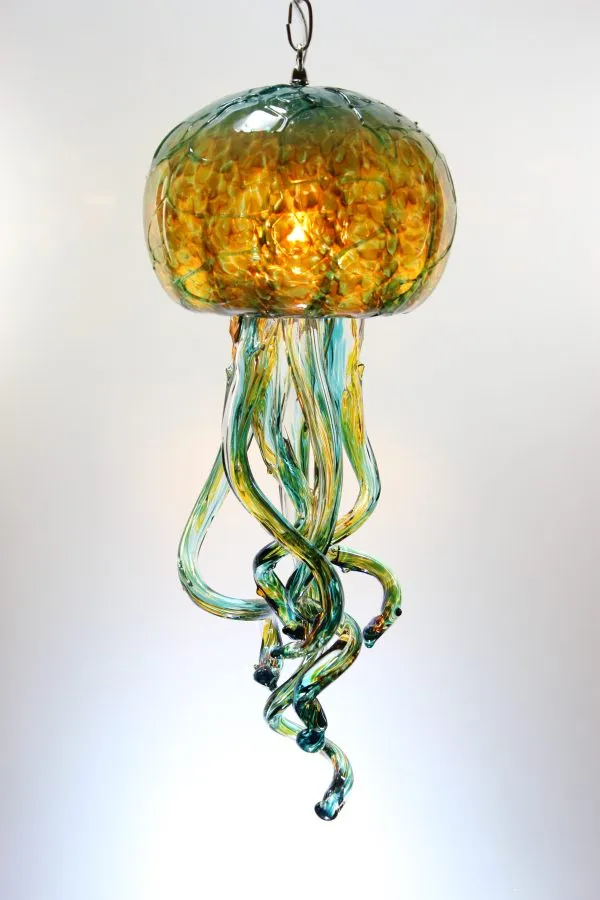
This is where things get serious. These fixtures use transparent, frosted, or colored blown glass to form the bell and tentacles. Some add glass “bubbles” on separate drops, with hidden RGBW LEDs that create an ambient underwater glow.
Done well, they look like floating marine sculptures. Light bounces through curves and bubbles, giving proper depth instead of flat illumination.
5. Luxury, collectible, and custom pieces
At the top end: Murano-style or studio-made chandeliers with sculpted glass tentacles, embedded bubbles, delicate color shifts, and perfectly concealed LEDs. Sometimes one large jellyfish; sometimes a cluster of varied forms.
Here’s the hard line: if you can see an LED puck, a bulb, or obvious hardware, it is not a luxury jellyfish chandelier. I don’t care how many “artisan” buzzwords the product page throws at you. True luxury in this category hides the technology and lets the glass do the talking.
Materials that work (and ones that age badly)
The most common materials in jellyfish chandeliers:
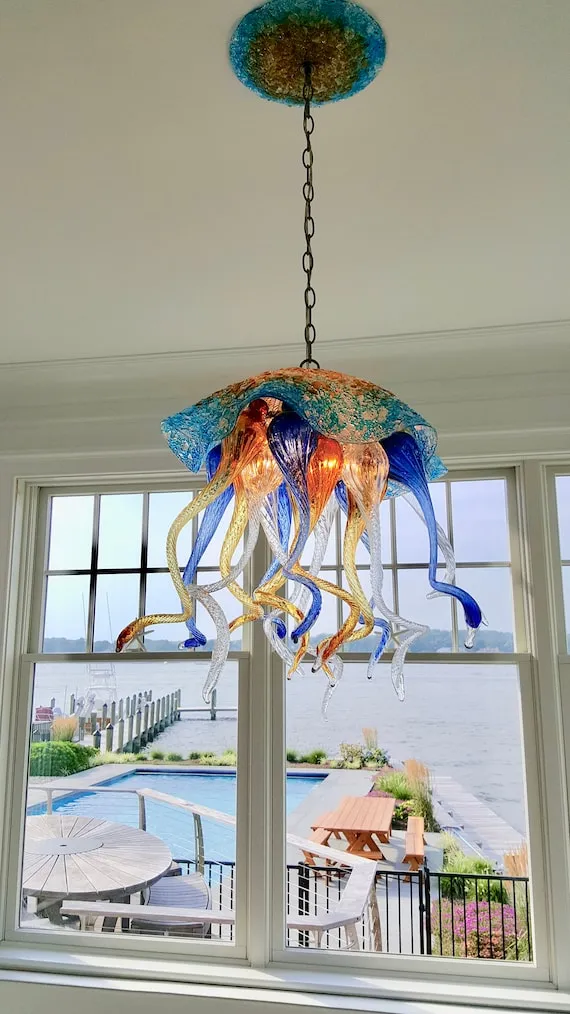
- Hand-blown or Murano-style glass bells and tentacles
- Acrylic domes and dangling strips
- Chrome or gold metal frames
- Natural wood beads
- Crystal or glass bubbles
- Integrated LED modules and slim suspension cables
Glass is the adult choice. Clear, blue, white, orange, or gold glass feels closest to actual water and light. Curved, translucent tentacles and suspended bubbles catch and bend light, which is what gives that gentle sense of movement.
Acrylic, on the other hand, tends to cheapen quickly. Scratches, yellowing, visible LED dots—it all undermines the illusion. It’s fine if you’re theming a kid’s room. It’s not fine in a dining room you expect to live with for a decade.
Wood beads can work in small doses, but not for a jellyfish form. They tangle, collect dust, and feel tired after one season of beach-house enthusiasm. If you’re serious about an ocean-inspired statement chandelier, go glass or skip the jellyfish concept entirely.
Where a jellyfish chandelier actually belongs
These lights are not background pieces. They dominate a room. Used in the right place, they earn it.
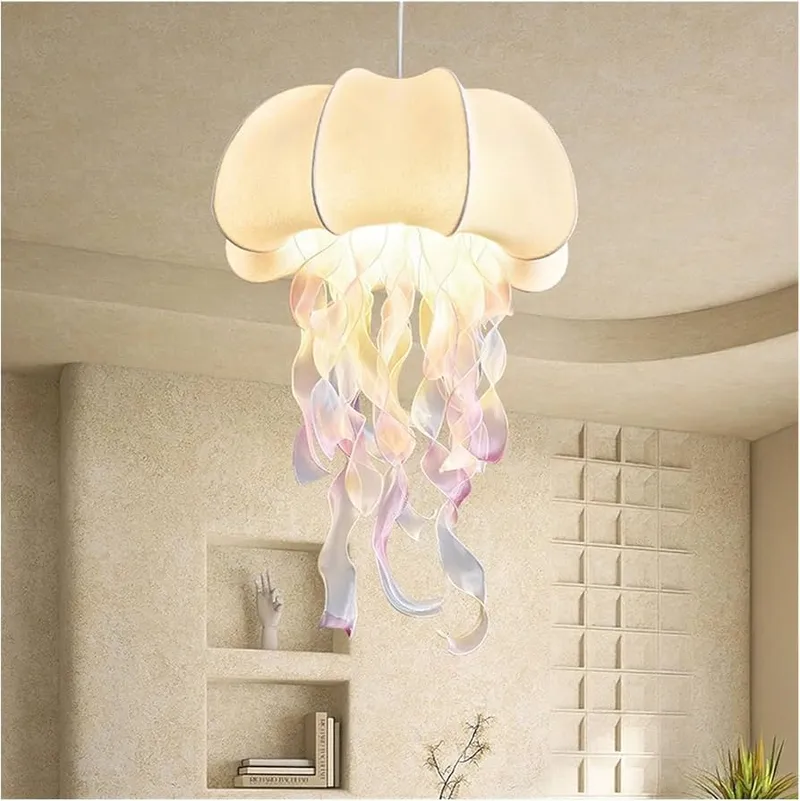
Dining rooms
A modern jellyfish pendant light above a dining table is either a triumph or a disaster—there’s no middle ground. Over the table, it becomes the visual anchor, so the rest of the room needs to quiet down.
Best option for a real dining room: a modern multi-light jellyfish-inspired linear pendant with warm-to-neutral white light and dimming. It runs the length of the table, spreads light evenly, and gives you mood control.
A single, more sculptural blown-glass jellyfish works better for smaller round tables or intimate breakfast nooks.
Entryways and foyers
Double-height entry? This is prime jellyfish territory. A vertical cluster of different “jellies” at varied heights can be spectacular, especially if you see it from a staircase or upper landing.
Key details: scale it to the volume (more on that below) and keep nearby décor restrained. The fixture should be the one big gesture, not fighting with giant mirrors, heavy patterns, and ten other “statement” pieces.
Living rooms and bedrooms
In living rooms, place a jellyfish chandelier above a central seating area, not just floating in the middle of the room for no reason. In bedrooms, think above a seating corner or centered at the foot of the bed, not directly over your face on the pillow.
Here the goal is more mood than task lighting, so softer output and dimming matter.
Restaurants, cafés, and hotels
Hospitality projects are where underwater-inspired statement chandeliers really earn their keep. A cluster over a lobby bar, a sculptural group above a stair void, or a row of glass jellyfish over banquettes can define the entire interior concept.
But again: acrylic, color-cycling “disco” fixtures instantly cheapen the room. If you’re aiming for luxury, stay with glass, subtle color, and hidden LEDs.
Light quality: color temperature, dimming, and mood
Light color can make the same jellyfish chandelier feel coastal and calm or cold and alien.
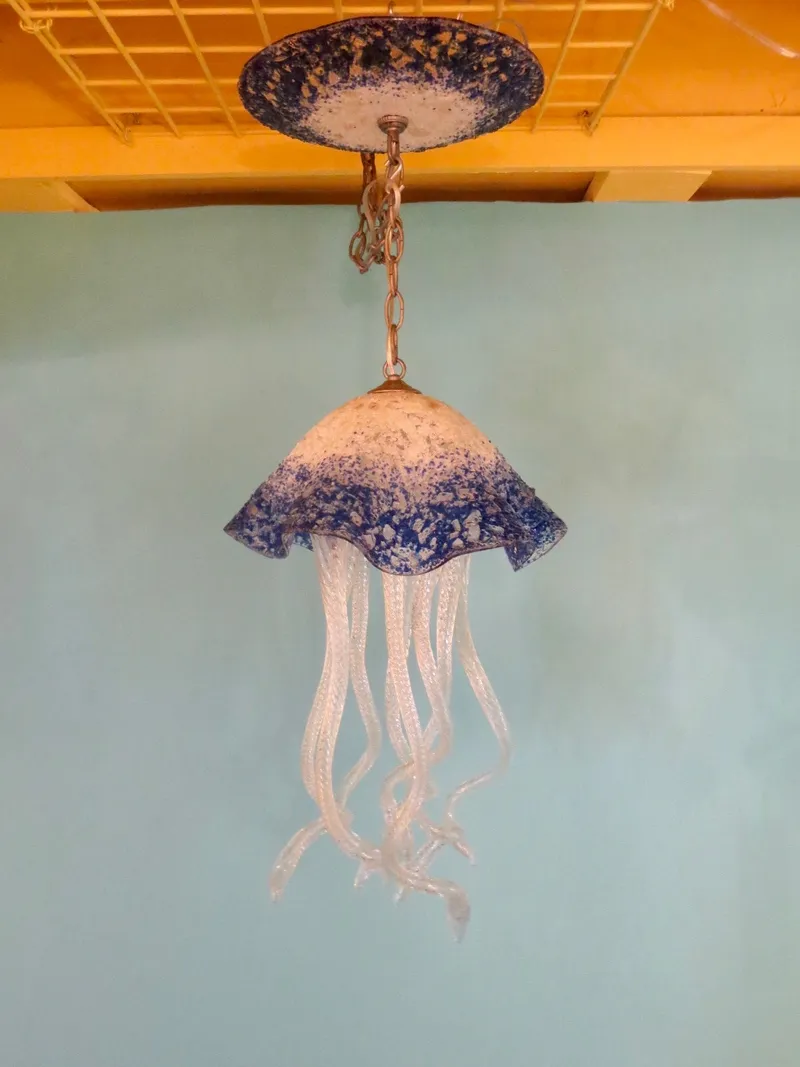
Color temperature
Most decent fixtures now offer one or more of these:
• Around 3000 K (warm white): relaxed, flattering, ideal for coastal interiors and homes. This is usually where I land for residential dining and living rooms.
• Around 4000 K (neutral white): cleaner and more modern. Works in contemporary apartments and hospitality where you want clarity without going clinical.
• 5000–6000 K (cool white): sharp, icy, and very “aquarium” if you push it. Good for a consciously futuristic bar or gallery; harsh at home if used as the main setting.
Some underwater-inspired chandeliers add RGB or RGBW for colored effects. Fine as a party mode, but you don’t want to live every evening under blue-green novelty lighting. For daily use, prioritize a good warm or neutral white channel with proper dimming.
Dimming and controls
Conventional-bulb models (with E26/E27 or GU10, for example) can usually be dimmed if you pair dimmable bulbs with a compatible wall dimmer. Integrated LED systems may have their own remote, wall keypad, or app.
When you specify a custom jellyfish chandelier for luxury interiors, insist on proper dimming and a clean control interface from day one. Retrofitting control systems into a sculptural glass piece is exactly as painful as it sounds.
Scale, height, and room size
Most people under-scale statement chandeliers. A lonely small jellyfish in a large room just looks odd, like it drifted in by mistake.
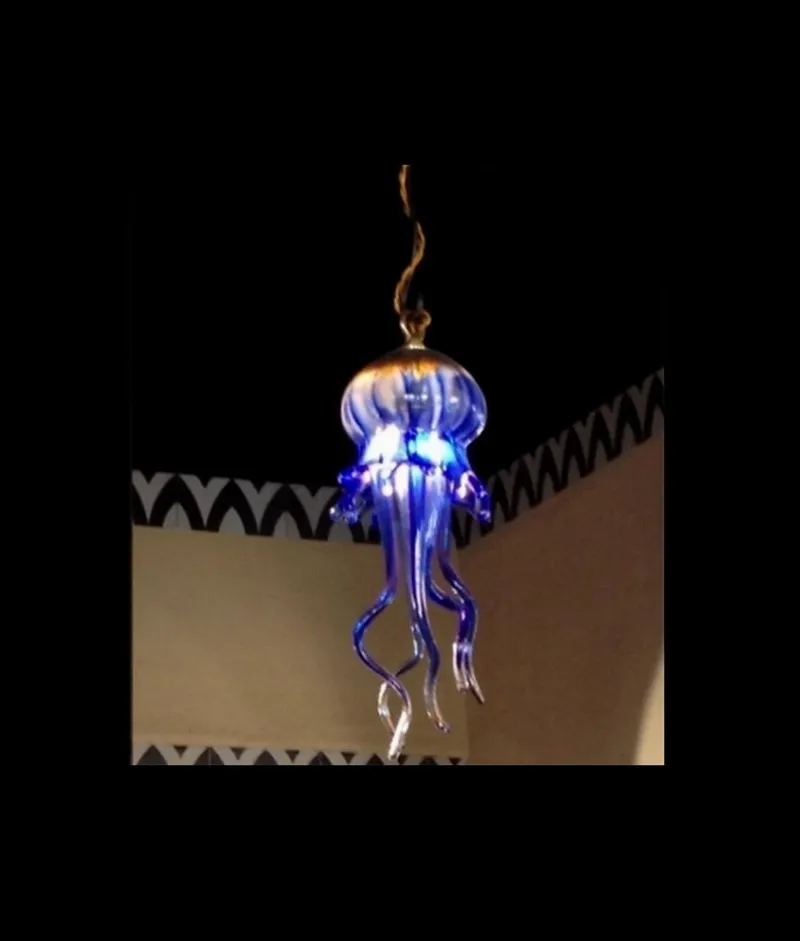
Room size and fixture size
As a rough guide, a multi-head acrylic model marketed for 10–15 m² gives you a sense of output and volume aimed at small rooms or compact dining zones. For anything bigger—open-plan living, tall entries—you’ll need either a much larger single fixture or a grouped installation.
Hanging height over tables
You want the jellyfish visually connected to the table but not crashing into sightlines.
Common rule of thumb: the bottom of the chandelier sits about 70–85 cm (28–34 inches) above the table surface, adjusted for very high or low ceilings and the actual shape of the fixture. Always check the manufacturer’s guidance, then judge in the room—especially with long “tentacles” that can feel lower than they are.
Commissioning a custom piece
A custom jellyfish chandelier for luxury interiors should be treated like commissioning sculpture, not picking a model from a catalog. The studio needs room photos, plans, ceiling heights, and key viewpoints.
Most people go too small. If you’re going custom, err toward slightly larger, or toward multiple medium pieces. You want a cohesive composition that fills the volume, not one nervous jellyfish floating in the void.
Styling: what to pair with a jellyfish chandelier (and what to avoid)
A strong jellyfish chandelier dictates the rest of the room’s behavior.
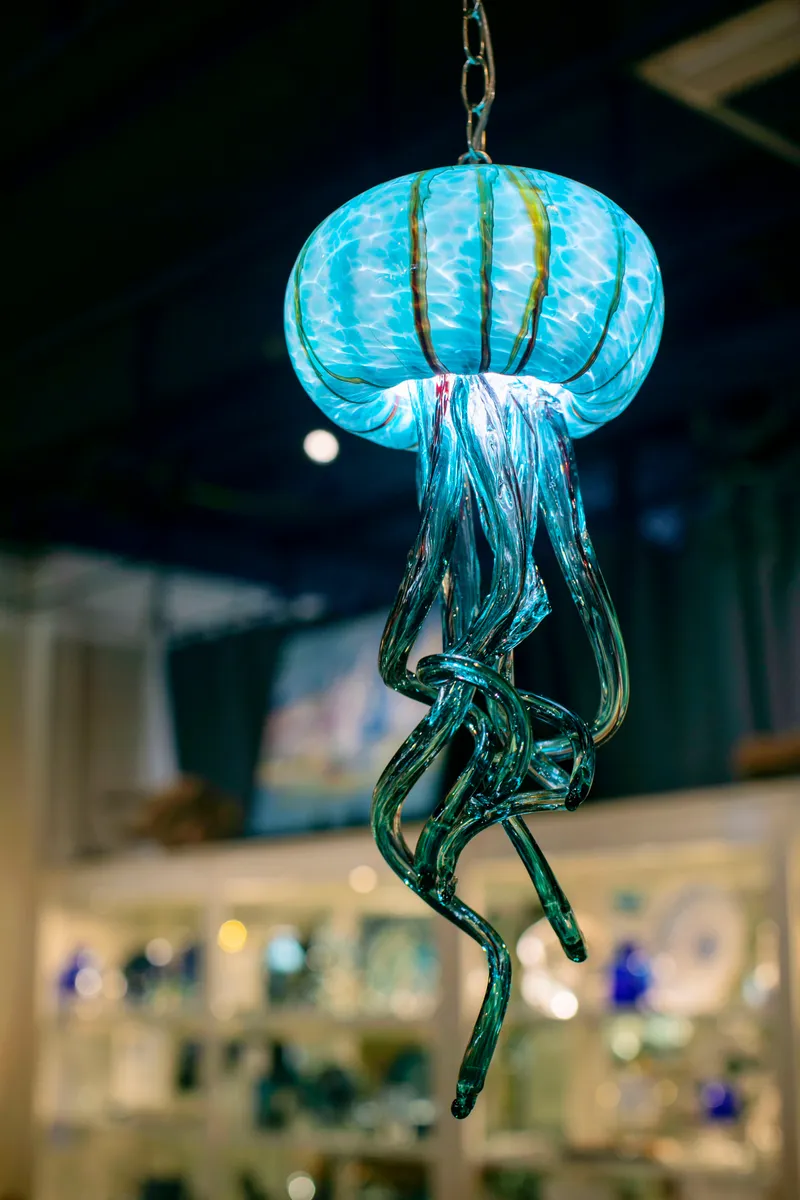
In a dining room, think of everything else—the chairs, rug, art—as backing vocals. Simple, modern lines, restrained materials, and maybe one other subtle ocean reference (a photograph, a palette of soft greens and sands) are enough.
What kills the look fast is stacking clichés: rope mirrors, “beach house” signs, driftwood everything, blue-and-white stripes from floor to ceiling, and then a hyper-detailed glass jellyfish on top. That combination is visual shouting. I’ve stripped that exact look out more than once; the chandelier works far better against a calm, modern shell.
Same rule for hospitality: if your chandelier is theatrical, keep ceilings, walls, and nearby fixtures disciplined. Let the jellyfish be the event.
Safety, moisture, and where not to use them
Most jellyfish chandeliers are rated for dry indoor rooms only. An IP20 fixture, for instance, is not waterproof and cannot handle bathrooms, outdoor verandas, or pool decks where it’s exposed to direct spray or heavy humidity.
If you absolutely want an underwater-inspired light in a bathroom or spa area, you need fixtures specifically rated for that zone and local code. Talk to a qualified electrician and check regulations where you live before hanging any decorative chandelier near moisture.
Mini-FAQ
Is a jellyfish chandelier practical for everyday dining?
Yes, if you choose a modern jellyfish-inspired linear pendant with good white light and dimming. The art-glass showpieces are more about atmosphere; you’ll often need additional wall or recessed lights for tasks.
Are beaded jellyfish chandeliers good for coastal interiors?
They photograph well on day one and age badly. Dust, tangles, and a handmade-but-not-in-a-good-way feel. For a coastal look that still feels high-end, use blue-and-white glass or a clean organic pendant instead.
What makes a jellyfish chandelier “luxury”?
Hand-blown glass, invisible light sources, precise scaling to the room, and thoughtful control of brightness and color. If you can see cheap acrylic, exposed LEDs, or clunky hardware, you’re in theme décor, not luxury lighting.