You’re standing in a showroom, staring at a gleaming white “sculptural” tub with a price tag that feels like a car payment, wondering if ceramic bathtubs are really worth it in a modern bathroom—or if you’ll hate yourself the first time someone drops a shower head in it. That’s the right question. This isn’t just ceramic vs acrylic on a spec sheet; it’s how much risk you’re willing to take for that ultra-crisp, gallery look.
Here’s the blunt verdict: use a ceramic or vitreous-china style tub only when you’re designing the whole room around it, with a rock-solid install and grown-up users. For almost everyone else—families, upstairs renovations, tight access, rentals—acrylic wins, with cast iron as the long-term “serious tub” and solid-surface as the smarter way to get modern luxury without so much fragility.
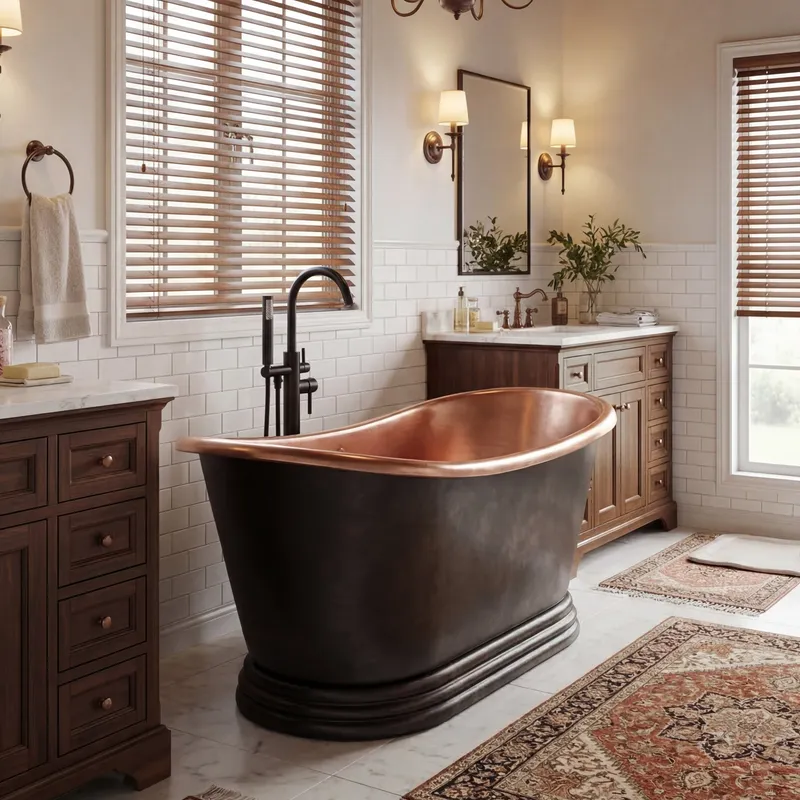
Show all 9 rows ▾Hide table ▴
| Metric | Ceramic / Vitreous-china style tub | Acrylic tub | Cast-iron enamel tub | Solid-surface / stone-resin tub |
|---|---|---|---|---|
| Durability (published measure) | Water absorption <0.5% (vitreous china classification, ISO 10545) [1] | Certified to CSA B45.5 / IAPMO Z124 (example: Clarion) [2] | Enamel surface can chip; exposed metal rusts rapidly [3] | Barcol hardness 51; Rockwell RB 60.5; 15‑T hardness 34.7 (example: Swanstone) [4] |
| Moisture / water resistance | Vitreous body with <0.5% water absorption [1] | Non‑porous polymer structure prevents water absorption [5][6] | Enamel is non‑porous; rust occurs if enamel is chipped [3] | Factory-sealed, smooth, non‑porous finish; water absorption 0.190–0.251% (example: Formica solid surface) [7][8] |
| VOC emission level (g/L) | Not established | Not established | Not established | Not established |
| R‑value / thermal resistance | Thermal conductivity 1.0–2.5 W/m·K (traditional ceramic body) [9] | Acrylic tubs outperform porcelain‑over‑metal tubs in heat retention [10] | Cast‑iron tubs hold heat better than acrylic, fiberglass, and enameled steel [11] | Not established |
| Maintenance interval (years) | Not established | Life expectancy 10–30 years depending on material and maintenance [12] | Not established | Scratches and small chips repairable by sanding and refinishing as needed [13] |
| Cost per unit (m²) | Not established | Not established | Not established | Not established |
| Cost per unit (sq ft) | Not established | Not established | Not established | Not established |
| Cost per bathtub (material only) | $1,000–$3,000 per ceramic bathtub [14] | $300–$1,000 per acrylic bathtub [15][16] | $500–$2,000 per cast‑iron bathtub [17] | Not established |
| Installed cost per bathtub | Not established | From $800 for a prefabricated 5‑ft acrylic alcove tub install; acrylic alcove installs $450–$1,400 [18][16] | Installation adds $500–$2,000 per tub [19] | $4,000–$10,000+ per solid‑surface or luxury tub installation [20] |
Ceramic / vitreous-china style bathtubs
Ceramic bathtubs are “look-first, live-second” objects. The material itself can be impressively tight: traditional ceramic sanitary bodies have water absorption below 0.5% by weight, classed as vitreous china under ISO 10545 [1]. That means the body doesn’t drink in stains or moisture; the risk is not soaking, it’s breaking.
Day to day, the experience is lovely when nothing goes wrong: a hard, glassy surface with a crisp edge, especially in a freestanding form against stone or large-format tile. But that same hardness and brittleness is the catch. Every dropped shower head or metal bottle feels like a small heart attack, because a chip or crack at the rim, drain, or floor isn’t just cosmetic—it can be a leak path into whatever sits below the tub. I’ve seen one tiny chip at a waste fitting turn into a ceiling repair downstairs.
Thermally, ceramic conducts heat in the range of 1.0–2.5 W/m·K [9]. In human terms, it feels cool to the touch at first and only slowly comes up to temperature. Compared with acrylic, which is known for better-feeling heat retention than traditional porcelain-over-metal shells [10], a pure ceramic body gives you that crisp, architect-y look but not cozy warmth when you first climb in.
The bigger story is installation. A vitreous-china or ceramic-like tub is heavier and more brittle than acrylic, and it demands a dead-level, properly supported floor. Any voids or rocking under the base can translate into hairline cracking later. Getting a large freestanding ceramic tub up stairs and around corners can mean extra labour before you even set it in mortar, and if it’s damaged on install, replacing it is nobody’s idea of fun. This is why, in practice, ceramic is a bad fit for “we’re renovating one bathroom in a timber-framed house with awkward stairs.”
Maintenance is mostly about treating the glaze like what it is—a hard but not indestructible glass layer. Non-abrasive cleaners, no steel wool, no aggressive scouring powders. Chips are technically repairable, but a perfect colour and gloss match on a high-sheen white is rare; in a modern bathroom where the tub is the center of attention, that patch will bug you every single time you walk in.
Bottom line: a freestanding ceramic bathtub belongs in a carefully planned contemporary bathroom where it has visual breathing room and you’re prepared to engineer the floor, plan plumbing early, and treat it as a piece of furniture. Shoving a huge ceramic oval 4 inches off a wall in a tight room is an expensive joke; if you’re not going all in on the design, you’re paying for fragility you don’t need.
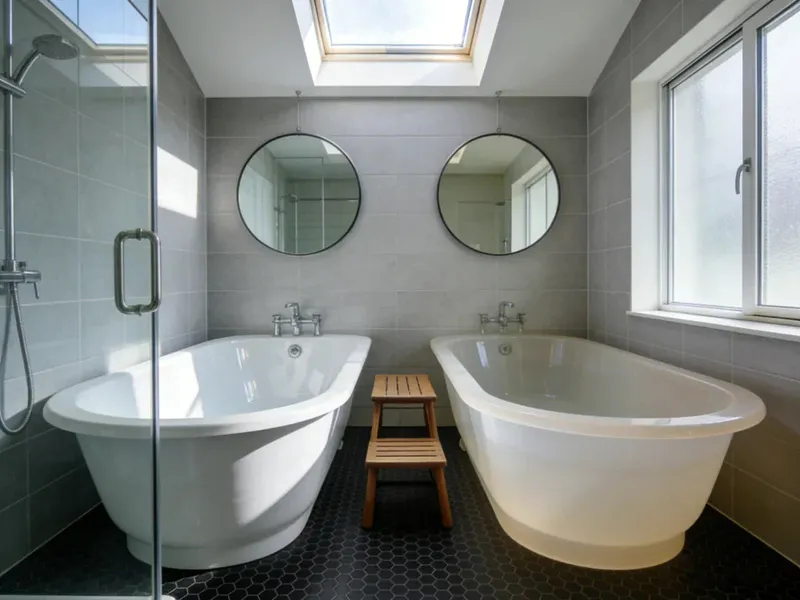

Acrylic bathtubs
If you’re comparing a ceramic vs acrylic bathtub for a real-life house—with kids, stairs, and tight hallways—acrylic wins. Every time. This is the material that keeps projects moving instead of turning into a logistics story.
Acrylic shells are light, non-porous, and forgiving. The polymer structure prevents water absorption [5] and high-density acrylic or ABS has a dense, non-porous molecular structure with no capillary channels for water [6]. You’re not worrying about the tub body soaking up moisture; your issues are support, scratching, and abuse. Reputable acrylic tubs are certified to plumbing-fixture standards like CSA B45.5 / IAPMO Z124—Clarion is one published example [2]—which at least tells you they’ve met a baseline for strength and impact in testing.
From a warmth perspective, properly made acrylic tubs are known to outperform porcelain-over-metal baths in heat retention [10]. In simple terms: they don’t suck the heat out of the water as fast, and they feel warmer against your skin when you step in. For long, hot soaks in an upstairs bathroom, acrylic often feels more comfortable than ceramic or steel-bodied “porcelain” tubs.
Cost is where acrylic quietly makes the rest of the field look silly. Material cost for an acrylic bathtub in the U.S. runs about $300–$1,000 per tub [15][16]. A standard 5 ft (1.5 m) prefabricated acrylic alcove tub installation can be done for as little as $800 [18], and typical acrylic alcove installations run $450–$1,400 including labour [16]. That’s the entire installed job, not just the shell sitting in a warehouse.
Life expectancy is decent when installed correctly: acrylic bathtub service life is generally quoted at 10 to 30 years depending on the specific material and maintenance [12]. That’s a wide range, and it’s honest. A well-supported, gently cleaned tub will reach the upper end; a flimsy shell perched on a lumpy floor and scrubbed with abrasive powder will not. But even in the worst case, you can usually replace an acrylic tub without demolishing half the house.
In practice, the common failure modes are flexing bases, hairline cracks at the drain, and scratches from harsh cleaning or gritty mats. Those are mostly installation and care problems rather than material defects. If you respect the manufacturer’s support instructions and avoid turning the surface into a science experiment with bleach, acrylic is the least stressful way to put a tub in a modern bathroom.
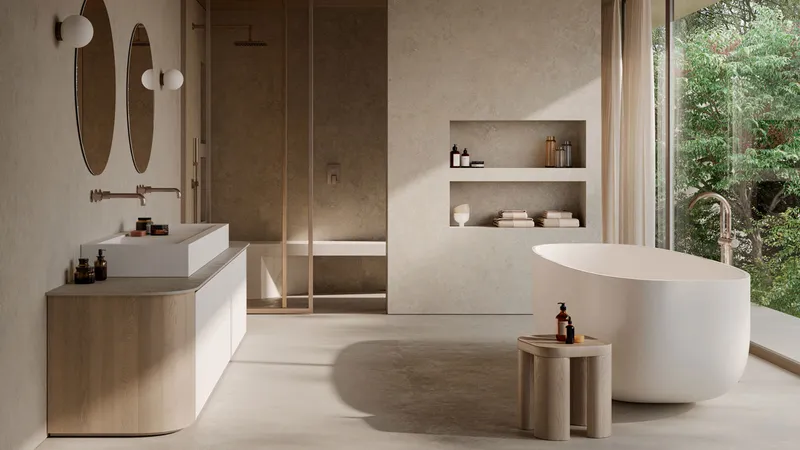
Cast-iron enamel bathtubs
Cast iron is the grown-up in the room. If your priority is a tub that feels immovable, quiet, and long-term, this is still the gold standard.
Thermally, it performs well: published guidance notes that cast-iron bathtubs hold heat better than acrylic, fiberglass, and enameled steel [11]. That mass works in your favor; once you get the tub and water up to temperature, it stays there. In daily use, that means you’re not topping up with hot water every 10 minutes.
The enamel surface itself is non-porous, but it has one unforgiving quirk: when it chips and exposes the metal, that metal can rust rapidly [3]. Small chips around the drain, overflow, or rim can start as a dark spot and turn into expanding rust staining if ignored. These are repairable with enamel kits or professional re-enamelling, but again, a perfect visual match on a bright white is tricky.
Cost-wise, cast-iron tubs themselves typically run $500–$2,000 in the U.S. [17]. Installation adds another $500–$2,000 depending on plumbing complexity, floor reinforcement, and whether you’re shoehorning it into an existing room or building new [19]. That means your total installed range is roughly $1,000–$4,000 before you even count tile or surround work. Always verify structural capacity and labour rates locally; floor spans and code expectations vary.
The catch, of course, is weight and access. A cast-iron tub can turn a simple bathroom remodel into a small structural project if joists, stair turns, or existing framing aren’t up to the load. Once it’s in, moving it later is a headache, which is precisely why I recommend cast iron for “we’re settling in for 20 years” projects, not for flip jobs or short leases.
For a contemporary bathroom, you don’t have to go traditional. A clean-line, enamelled cast-iron tub can read as modern if the surround and fittings are restrained. You’re trading a bit of visual sharpness compared with ceramic or solid-surface for a much higher tolerance of real life. That’s usually a good trade.
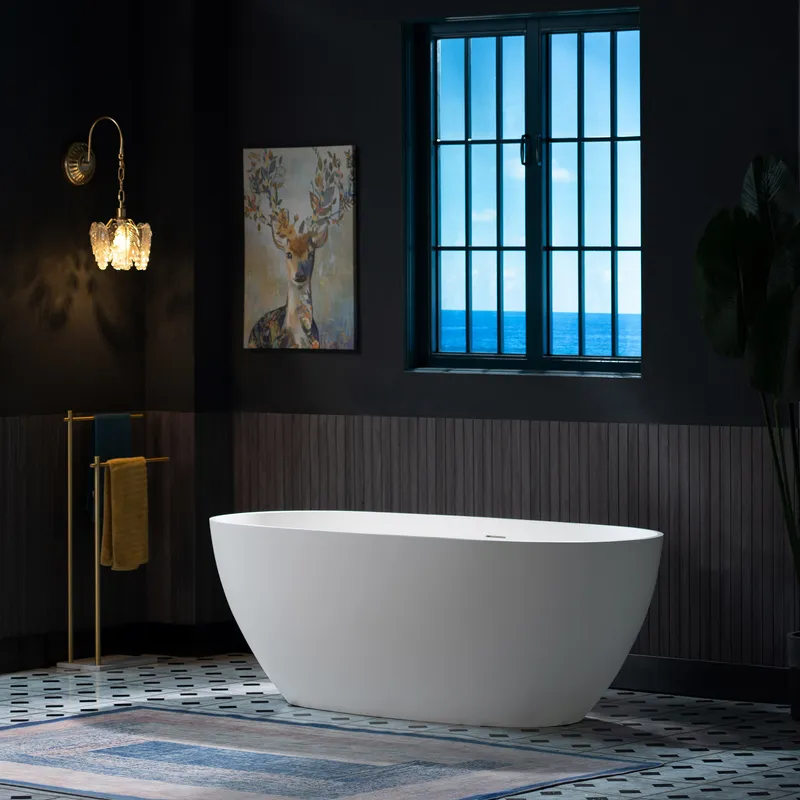
Solid-surface / stone-resin bathtubs
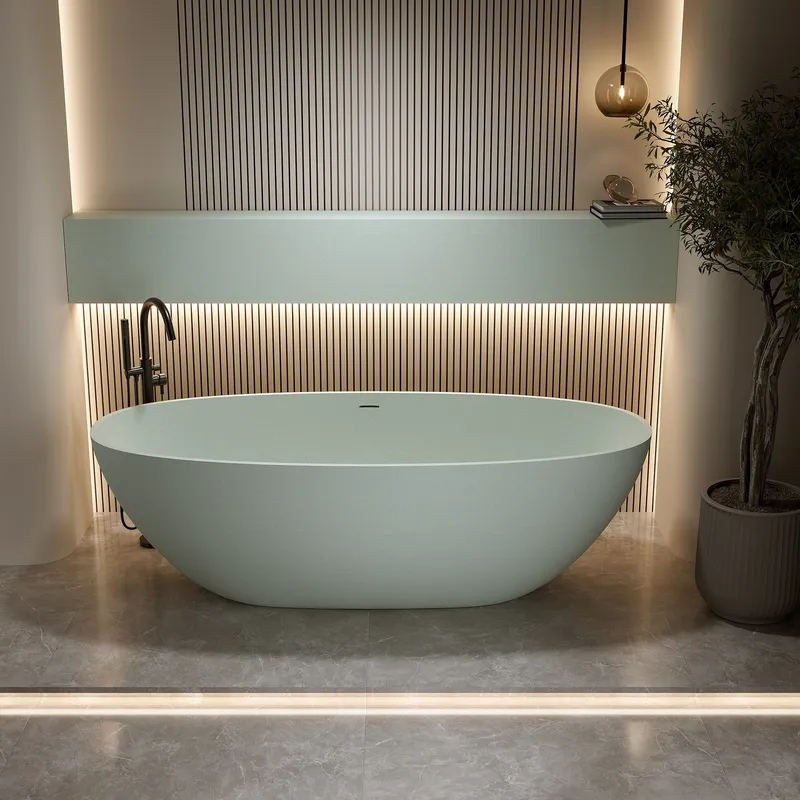
Solid-surface and stone-resin tubs are what ceramic bathtubs want to be when they grow up: monolithic, sculptural, and actually manageable in a contemporary bathroom.
In terms of hardness, manufacturer data for Swanstone solid surface reports a Barcol hardness of 51, Rockwell RB hardness of 60.5, and 15‑T hardness of 34.7 [4]. That translates into a shell that resists everyday knocks better than a brittle glaze. These materials are engineered for bathroom use: one manufacturer’s solid-surface tub care guide describes a factory-sealed, smooth, non-porous finish [7], and Formica’s solid surface shows long-term water absorption in the narrow range of 0.190%–0.251% [8]. In practice, that’s effectively waterproof for tub duty.
One of their advantages over ceramic is repairability. Scratches and small chips in solid-surface products can be repaired by sanding with coarse paper, then fine paper, and a sanding sponge to restore the finish [13]. That’s not DIY for everyone, but it’s realistically fixable. A similar impact in a ceramic glaze is more likely to leave you with a forever-visible patch.
You pay for the privilege. Published figures for solid-surface or luxury bathtub installations in the U.S. run $4,000–$10,000 or more per tub [20]. That’s installed, and “or more” is doing heavy lifting here when you start specifying large freestanding models and bespoke plumbing layouts. Before you fall in love with a sculpted stone-resin piece, confirm not just budget but access and floor capacity with your contractor.
Used well, solid-surface beats ceramic hands down for contemporary luxury: you get that calm, furniture-like block of a tub without living in fear of hairline cracks and irreplaceable glazes. It’s still heavy and still needs a flat, well-prepped floor, but if you’re already spending in ceramic-money territory or above, it’s usually the better long-term choice.

Which one should you choose?
Stop thinking in abstract “material quality” terms and look at your actual project. Here’s where each bathtub material makes sense in modern bathroom design.
Budget or midrange remodel, standard alcove or drop-in
Acrylic wins. Material cost at $300–$1,000 per tub [15][16] and installed from as low as $800 for a 5 ft alcove [18] is hard to argue with when you’re juggling tile, fixtures, and maybe a new vanity. You get a warm-to-the-touch tub, modern shapes, and a 10–30 year expected life depending on care [12]. Ceramic adds cost and fragility here without meaningful functional gain.
Family bathroom with kids, renters, or heavy use
Again, acrylic. Non-porous, impact-tolerant shells [5][6] and easy replacement trump brittle luxury. Cast iron is also excellent for long-term durability, but the weight, cost ($500–$2,000 tub plus $500–$2,000 install [17][19]), and difficulty of future changes make it less friendly for rentals or frequently updated houses.
Design-led freestanding tub in a modern bathroom
If you’re chasing that sculptural centerpiece, skip ceramic and go solid-surface or stone-resin. You get a monolithic form, non-porous finish [7][8], real hardness [4], and repairable surface [13]. Yes, installed costs in the $4,000–$10,000+ band [20] are serious money, but you’re already in that territory if you’re considering a high-end ceramic tub at $1,000–$3,000 for the shell alone [14] plus careful installation.
“Forever home” with strong structure and no access issues
Cast iron is my first call. You get excellent heat-holding [11], a solid feel, and a tub that, chips aside [3], ages gracefully. If the bathroom layout is stable and you’ve got the joists and stair turns to handle it, spending $1,000–$4,000 total [17][19] on a cast-iron installation makes more long-term sense than gambling on a brittle ceramic showpiece that might not survive one bad impact.
High-end, photography-driven project
If the tub is the hero shot and you’re willing to treat it as such, a ceramic or vitreous-china style tub can still be justified—especially in powder rooms or lightly used master baths. But be honest: you’re paying $1,000–$3,000 for the tub [14], plus premium install, for a look that solid-surface often delivers with fewer horror stories. Ceramic in this context is for clients who understand it’s closer to sculpture than appliance.
Whatever you pick, confirm structural capacity, local code requirements, and actual labour rates with a local professional. Floor loading, plumbing access expectations, and installation practices vary by region, and they can make or break the feasibility of a heavy or brittle tub.
Key facts
| What it covers | Value | Source |
|---|---|---|
| Ceramic / sanitaryware water absorption | <0.5% by weight; vitreous china classification (ISO 10545) [1] | Vitreous china body performance |
| Ceramic thermal conductivity | 1.0–2.5 W/m·K (traditional ceramic pottery material) [9] | Thermal behaviour of ceramic bodies |
| Acrylic water absorption / porosity | Non‑porous polymer structure prevents water absorption; no capillary channels [5][6] | Acrylic and ABS material description |
| Acrylic bathtub standard | Certified to CSA B45.5 / IAPMO Z124 (Clarion example) [2] | Plumbing-fixture compliance |
| Solid-surface hardness | Barcol 51; Rockwell RB 60.5; 15‑T hardness 34.7 (Swanstone) [4] | Manufacturer mechanical data |
| Solid-surface porosity / absorption | Factory-sealed, smooth, non-porous finish; 0.190–0.251% water absorption (Formica solid surface) [7][8] | Manufacturer product data |
| Cast-iron chip and rust behaviour | Chips in enamel expose metal to rapid rusting [3] | Cast-iron tub maintenance risk |
| Heat retention comparison | Acrylic tubs outperform porcelain-over-metal tubs in heat retention [10]; cast-iron tubs hold heat better than acrylic, fiberglass, and enameled steel [11] | Thermal performance claims |
Quick answers
Are ceramic bathtubs more waterproof than acrylic?
Ceramic sanitary bodies used for bathtubs are classed as vitreous china with water absorption below 0.5% by weight [1], while acrylic’s non-porous polymer structure prevents water absorption altogether [5][6]. In practice both are effectively waterproof; the bigger difference is brittleness for ceramic and scratch sensitivity for acrylic.
How long does an acrylic bathtub last?
Acrylic bathtub life expectancy is generally 10 to 30 years under residential use, depending on material quality and maintenance [12]. Proper support during installation and gentle cleaning can keep you toward the upper end of that range.
Is a ceramic bathtub more expensive than acrylic?
Yes—ceramic bathtubs typically cost $1,000–$3,000 for the tub alone [14], while acrylic bathtub materials usually cost $300–$1,000 per tub [15][16]. Acrylic also has lower installed entry points, with prefabricated 5 ft alcove tubs installed from about $800 [18].
Which bathtub material holds heat best: acrylic, ceramic, or cast iron?
Cast-iron bathtubs hold heat better than acrylic, fiberglass, and enameled steel tubs [11], making them the top choice for long soaks. Acrylic tubs generally outperform porcelain-over-metal tubs in heat retention [10], while traditional ceramic bodies conduct heat in the range of 1.0–2.5 W/m·K [9], which feels cooler at first contact.
What’s the installed cost difference between acrylic and cast-iron tubs?
In the U.S., a basic prefabricated 5 ft acrylic alcove tub can be installed from about $800 [18], and typical acrylic alcove installs run $450–$1,400 including labour [16]. Cast-iron tubs cost $500–$2,000 for the tub plus $500–$2,000 for installation [17][19], so total installed costs often land in the $1,000–$4,000 range before finishes.
How expensive is a solid-surface or stone-resin luxury bathtub to install?
Published figures for solid-surface or luxury bathtub installations in the United States are $4,000–$10,000 or more per tub [20]. That reflects both the premium material and the handling, floor prep, and plumbing coordination these heavy, design-led tubs require.
Sources
Facts last verified 2026-09-30.
- Traditional ceramic pottery material used in sanitaryware, formulated from 40–50% kaolin, 25–35% feldspar, and 20–30% quartz and fired at 1,200–1,250°C, achieves a water absorption of <0.5% (vitreous china classification per ISO 10545). — Patsnap, retrieved 2026-09-30.
Typical sanitaryware bodies are formulated from 40–50% kaolin, 25–35% feldspar, and 20–30% quartz, fired at 1,200–1,250°C to achieve water absorption <0.5% (vitreous china classification per ISO 10545…
- Clarion bathtubs are certified to meet CSA B45.5/IAPMO Z124. — Clarion, retrieved 2026-09-30.
Certified to meet CSA B45.5/IAPMO Z124 Standard.
- Chips or scratches in the enamel of a cast-iron bathtub can expose the metal to rapid rusting. — HomeAdvisor, retrieved 2026-09-30.
If it chips or scratches, the metal may rust quickly.
- Swanstone solid surface has a Barcol hardness of 51, Rockwell RB hardness of 60.5, and 15-T hardness of 34.7. — Swan, retrieved 2026-09-30.
Barcol Hardness: 51 Rockwell RB Hardness: 60.5 15-T Hardness: 34.7
- Acrylic’s non-porous polymer structure prevents water absorption. — Taobao.com, retrieved 2026-09-30.
Acrylic’s non-porous polymer structure prevents water absorption, eliminating the hydrolysis risk that causes bamboo fibers to swell and degrade in tropical humidity.
- High-density acrylic or ABS plastic has a dense, non-porous molecular structure and does not have capillary channels that draw in water. — Taobao.com, retrieved 2026-09-30.
These materials are synthetic polymers with a dense, non-porous molecular structure. Unlike wood, they do not have capillary channels that draw in water.
- A solid-surface bathtub described in its care guide has a factory-sealed, smooth, non-porous finish. — manufacturer care guide, retrieved 2026-09-30.
Your solid surface bathtub has been factory sealed and polished to a smooth, non-porous finish.
- Formica solid surface has long-term water absorption ranging from 0.190% to 0.251%. — Formica Group, retrieved 2026-09-30.
Water Absorption 0.190% to 0.251% long term
- The thermal conductivity of traditional ceramic pottery material ranges from 1.0–2.5 W/m·K. — Patsnap, retrieved 2026-09-30.
Thermal conductivity ranges from 1.0–2.5 W/m·K, providing effective thermal insulation for cookware, kiln furniture, and refractory applications 4 .
- Acrylic bathtubs outperform porcelain bathtubs in heat retention because porcelain baths are made by layering enamel or porcelain covering over a metal or iron foundation, which forms a barrier that releases heat more quickly. — MCC Kitchen, Bath & Closet Remodeling, retrieved 2026-09-30.
The former outperforms the latter in the acrylic bathtub vs. porcelain area for heat retention. The cause for this is due to the manufacturing process of porcelain baths. This tub is made by layering …
- Cast-iron bathtubs hold heat better than acrylic, fiberglass, and enameled-steel bathtubs. — Hunker, retrieved 2026-09-30.
When compared to the other popular materials for bathtubs — acrylic, fiberglass and enameled steel — a cast iron bathtub is more durable, easier to clean and better at holding heat.
- Acrylic bathtub life expectancy is generally 10 to 30 years, depending on the material and maintenance performed. — Fixr, retrieved 2026-09-30.
Most bathtubs last for 10 to 30 years, but the lifespan depends on the material and maintenance you perform.
- Thermogroup says scratches and small chips in solid-surface products can be repaired by sanding with coarse sandpaper followed by fine sandpaper and a sanding sponge to restore the finish. — Thermogroup, retrieved 2026-09-30.
Over time, scratches and small chips can happen. These can be fixed by sanding using a sanding sponge for small scratches and sandpaper for deeper scratches or small chips. Start with 100 or 150-grit …
- Ceramic bathtubs typically cost $1,000–$3,000 per bathtub for the tub itself; the cited source does not specify an installed cost. — Vanity Art, retrieved 2026-09-30.
Prices can vary widely depending on customization and finish, but ceramic bathtubs typically fall between $1,000 and $3,000, making them a more premium option.
- Acrylic bathtub materials cost $300 to $1,000 per tub in the United States. — This Old House, retrieved 2026-09-30.
|Acrylic|$300–$1,000|Widely available and easy to install|Most standard replacements|
- Acrylic alcove bathtub materials cost $300 to $1,000 per tub, with total installation costs of $450 to $1,400 per tub in the United States. — Fixr, retrieved 2026-09-30.
An alcove tub will cost between $300 and $1,000 for the materials alone, which puts the total cost between $450 and $1,400.
- Cast-iron bathtubs typically cost $500 to $2,000 for the tub, excluding installation. — Badeloft, retrieved 2026-09-30.
Cast iron bathtubs generally fluctuate between $500-2,000 typically, although there are many outliers on either end.
- A prefabricated 5-foot acrylic alcove bathtub installation can cost as little as $800 in the United States. — Fixr, retrieved 2026-09-30.
The lowest cost for a bathtub installation or replacement is around $800 for a prefabricated 5-foot acrylic alcove tub.
- Installation of a cast-iron bathtub typically adds $500 to $2,000, depending on plumbing complexity, floor reinforcement, and replacement conditions. — Badeloft, retrieved 2026-09-30.
Installation costs add $500–$2,000 on top of the tub price, depending on plumbing complexity, floor reinforcement needs, and whether you’re replacing an existing tub or installing fresh.
- Solid-surface bathtub installation costs $4,000–$10,000 or more in the United States. — Aquatica, retrieved 2026-09-30.
Solid surface or luxury bathtub installation|$4,000–$10,000+|